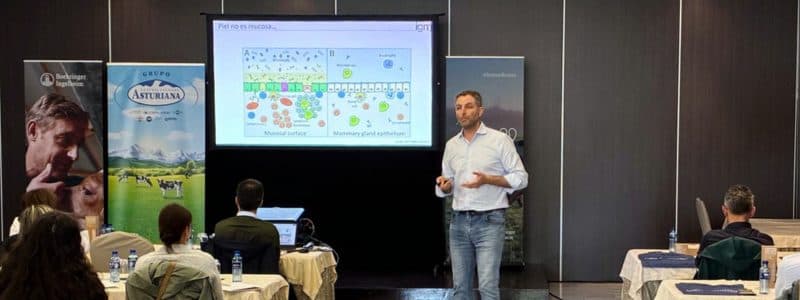
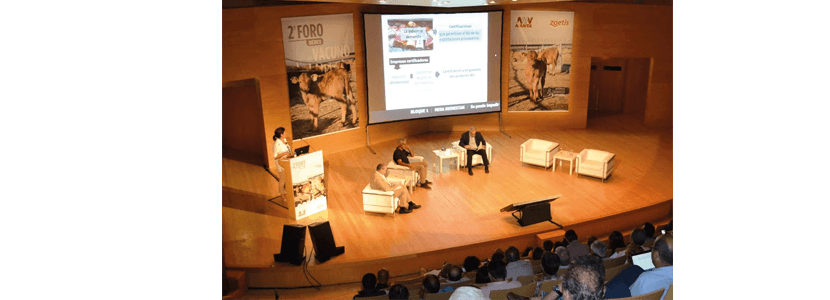
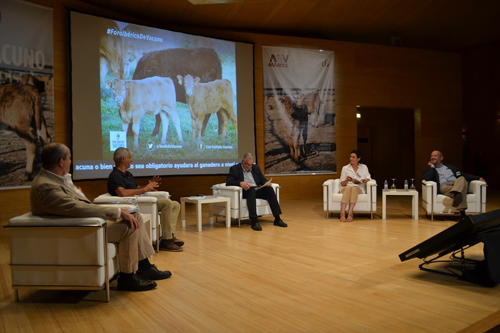
More than 250 professionals, including industry entrepreneurs, beef cattle producers, veterinarians, technicians, and other sector stakeholders, which is the third most important livestock sector in economic terms in Spain, gathered at the Zaragoza Auditorium for the 2nd Iberian Beef Forum organized by Zoetis, and Nanta, companies leading the animal health and nutrition sectors respectively.
The program was structured into six technical panels focused on health, welfare, nutrition, export, commercialization, and brand image, coinciding with the six fundamental pillars to consider to guarantee the excellent results of our country in terms of beef production, with this sector representing 5.8% of the Final Agricultural Production and 17% of the Final Livestock Production.
Health, welfare, and nutrition: keys to sustainable and profitable production Beef production reaches 2,760 million euros per year, with a total of 638,000 tons of meat per year. This production is possible thanks to maintaining an exemplary health status of the cattle herd, guaranteed through comprehensive vaccination programs against the most important diseases for production.
Thus, one of these diseases, Infectious Bovine Rhinotracheitis (IBR), and the future of control measures was one of the topics discussed at the Forum by Luis José Romero, Head of the Epidemiology Area, of the Subdirectorate General of Animal Health and Hygiene and Traceability of the Ministry of Agriculture (MAPA).
Romero presented the foundations of the National IBR Eradication Program, which will likely include the prohibition from next year of the use of unmarked vaccines, something that in his own words, “will entail additional costs derived from the higher price of marked vaccines – 7 euros more per animal per year -, the complication of management for vaccine application, and the possibility of a decrease in the vaccination rate against other diseases, such as PI3, RSV, and BVD.”
The health panel could not overlook another topic of great current relevance, both for animal health and public health: the responsible use of antibiotics and antimicrobial resistance. José María San Miguel, National Veterinary Manager of Zoetis, presented the general guidelines to reduce the use of antibiotics in beef production, through vaccination plans, according to the prevalence of diseases in each geographical area, and biosecurity techniques as fundamental measures.
“The knowledge of the main pathologies affecting beef production at the national level is key to planning an optimized health program adapted to the real situation of our farms – explained San Miguel –, which ultimately also means a Responsible Use of Antibiotics.”
But the mentioned production figures would not be possible without also considering animal welfare, a topic covered by Mari Paz Lavín, a senior scientist at the Spanish National Research Council (CSIC), who stated that “animal comfort influences a higher quality product”; and proper animal nutrition, with which, “besides seeking sustainable production, competitiveness is intended to be improved,” as explained by Joan Riera Prat, Head of Beef Products at Nanta.
Revaluing the sector’s image
In the export panel, the main data of this sector were highlighted: Spain is the sixth largest exporter in the EU with more than 170,000 tons exported of fresh, chilled, and frozen meat, which means a value of 900 million euros per year.
The growth of this sector at the international level, in non-EU countries such as Algeria or Morocco, was also highlighted. A success that is due to the European Production Model (EPM) applied by Spanish beef, which involves the highest standards of quality and food safety.
On the other hand, as reflected, one of the challenges of this sector is to make inroads into Asian markets – Hong Kong, China, South Korea – as has already been achieved in Arab countries in recent years.
In this regard, the Forum featured the testimonies and experiences of some of the main beef-producing companies in our country: Grup Viñas (Catalonia), Bos Nostrum (Valencian Community), and Fribin (Aragon).
The last link in the commercialization of beef products is the brand image. In this regard, of the 638,000 tons of meat production per year, 5.7% of the total is meat belonging to some Protected Geographical Indication; and 3% classified as organic.
The Forum reflected the need to provide added value to the consumer and take care of the image that they have formed of this sector. This topic was addressed by the manager of the Interprofessional Organization of Beef (Provacuno), Javier López, who stated that “today it is not enough to offer just a quality product.”
This necessary aspect of “value creation” was also addressed by Álvaro Robles, from Laboratorio Almond. The real experience in relation to this topic came from the company Castellana de Carnes S.A., whose representative explained the value creation model for the consumer that they have implemented.
Finally, the voice was given to the Livestock Cooperative of the Valle de los Pedroches (Covap), which presented how the rearing process and individualized monitoring of their animals along with care and feeding in the Dehesa, make their meat a product of great taste and quality.
1Source of beef sector figures: Provacuno and Subdirectorate General of Livestock Products of the Ministry of Agriculture.
About Zoetis
Zoetis is the leading animal health company, dedicated to supporting its customers and their businesses. Built on 60 years of animal health experience, Zoetis discovers, develops, manufactures, and markets veterinary medicines and vaccines complemented by diagnostic products and supported by a wide range of services.
In 2017, the company generated annual revenues of more than 5.307 billion USD. With nearly 9,000 employees globally, its products serve veterinarians, farmers, producers, and all those who raise and care for livestock and companion animals in more than 100 countries.
More information at www.zoetis.es