



We are living in a historical period where emerging diseases seem to be a constant in our lives.
Various infectious agents, mainly viral, are appearing one after another in our territory and farms. This occurs to the bewilderment of institutions, technicians, and other members of the farming sector, who are trying to hastily apply control measures to limit their spread and even consider eradication when this possibility is real.
|
 African swine fever, avian influenza, Newcastle disease, contagious nodular dermatitis, or serotype 3 of bluetongue are just some of the examples we must consider based on recent events.
Each with its particularities, these are infections that disrupt our lives, generating a health and economic impact with unpredictable consequences.
 Logically, more attention is always paid to those diseases that can affect humans, but fortunately, most of those mentioned are not zoonoses.
 Among the risk factors for Spain when experiencing episodes of these emerging diseases, we must consider geographical aspects, such as the proximity to the African continent or its role as a passage area for migratory birds, in the case of avian diseases.
Obviously, in both cases, they are difficult to control and little can be done.
Something similar happens with the presence of vectors such as Aedes spp. or Culex spp. which, once in our territory, are impossible to eradicate. Against them, only control strategies can be applied to limit the risk of exposure.
Once these infections appear, the transmission routes, the movement of animals and other risk factors will be decisive in the degree of impact on individuals and populations.
There, action can be taken:
 Developing surveillance and control systems that limit the spread of infection through early diagnosis.
Applying containment measures as quickly as possible, especially when effective vaccines are available.
Speed is crucial in the face of any of these infections.
|
We must consider very positive the efforts and work carried out for the containment of contagious nodular dermatitis in Catalonia or the deployment carried out for the control of African swine fever episodes in wildlife, also in this community.
|
 A priority objective is to try to prevent the diseases from spreading much beyond where the first cases were located. When this is achieved, it is very encouraging news for the work against these infections and others that have already arrived or will arrive.
Cattle: monitoring contagious nodular dermatitis and its evolution
In the specific field of cattle, there are several infections that keep the sector on edge, starting with the unexpected contagious nodular dermatitis.
After its passage through Italy and France, it is under control in Spain, although we must remember that we are currently in a period of vector inactivity.
 This has been possible thanks to the use of vaccination as a preventive measure in groups close to the outbreaks and, above all, to the effort of many professionals who have acted with speed and diligence.
The situation in France, which is far from what has been achieved in Spain, keeps the entire sector on edge. Not only has the agent not been eradicated, but unfortunately, it has spread to other areas of the country in the final months of 2025 and early 2026.
 Its proximity to the Pyrenees and the enormous concentration of animals in some areas of Catalonia or Aragon makes us very cautious regarding the evolution of this epidemiological situation, especially when in the coming months the reactivation of vector activity is likely.
Added to this is the resumption of the transit of calves from France for fattening in various areas of Spain.
 Although they do not come from the affected areas and their restriction areas, their proximity and the apparent lack of control of the infection forces us to be cautious about what may happen in the first half of the year.
We hope that the situation can be definitively controlled and that we can gradually move towards the status of officially free of the infection.
Regarding other infections, we must not lose sight of what is happening on the African continent, where diseases such as the dreaded foot-and-mouth disease are rampant.
 It is evident that the arrival of this infection would mark a before and after due to its enormous health, economic, and commercial implications.
|
The last massive outbreak that occurred in the United Kingdom at the beginning of the century attests to this, with millions of animals culled, all aimed at regaining infection-free status as soon as possible.
|
 We hope that the situation can continue to be kept under control, although with these infections, we must never lose sight of everything that is happening.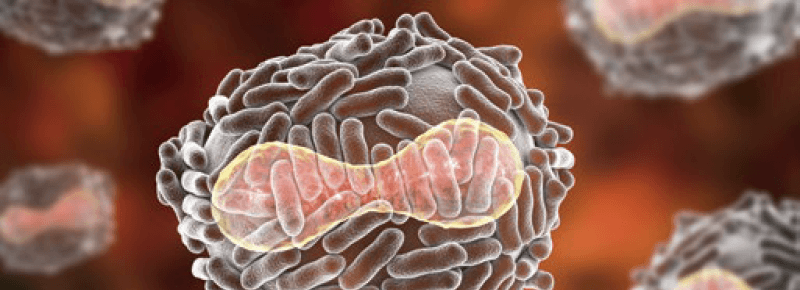
Small ruminants: plague and pox continue to attract our attention, with the permission of bluetongue
The impact of bluetongue in Spain has been very strong in the second half of 2025, with the expansion of serotype 3 coming from Northern Europe across many farms of different species.
 Not only affecting sheep, but also cattle and, surprisingly, goats to a large extent.
 In the months of July or August, various goat farms have suffered very severe episodes of mortality in goat kids, sometimes exceeding mortality rates of over 70% of the kidding season, frequently recording abortions and other reproductive problems.
Only vaccination seems to mitigate the effect of this infection, so we hope that during this pause in vector activity, we have taken the time to immunize our farms, starting with sheep farms.
 Time and the coming months will tell us if we have been successful in prevention.
Another infection that continues to keep us on edge is the plague of small ruminants.
 Also included in the EU List A, this infection continues to roam various areas of Europe, with Greece being one of its hotspots.
 Fortunately, it has never appeared in Spain and the absence of vectors associated with its transmission allows us to be optimistic about its possible eradication in the European continent.
 The infection requires direct contact with the secretions of infected animals, so limiting contact between affected and free herds is essential.
Finally, we cannot forget an infection that visited us in 2022 and that, fortunately, we were able to eradicate: sheep pox.
It is an infection that affects small ruminants, but mainly the ovine species, and that, unexpectedly, appeared in Andalusia, specifically in the province of Granada, in September 2022.
Fortunately, the episode was resolved after a year of uncertainty. All this, after the complete culling of some herds in Andalusia and Castilla-La Mancha, the two autonomous communities that were affected.
The arrival of these infections affecting ruminants and others affecting other species should be considered a serious warning of what could happen with other equally or more dangerous infections.
In just 4-5 years, various infectious diseases have been “protagonists” in our daily lives.
Today, there is no need to talk about other possible threats such as Rift Valley fever, Akabane disease, contagious caprine pleuropneumonia, and many others that could affect our ruminant livestock and that, fortunately, we do not have.
 We must be aware of the situation, the existing risk, and the need to always be vigilant against any risky practice or suspicion that any of these agents may appear in our territory.
Our professionals, farmers, and technicians constitute the first line of control, and they must be alert to the presence of any clinical sign or unusual situation not previously recorded in their farms. Speed is crucial when establishing effective control measures. |
You may be interested: Contagious nodular dermatitis: keys to stopping the advance of this dangerous disease
Continue reading this content
Register for free or log in to access all rumiNews content.