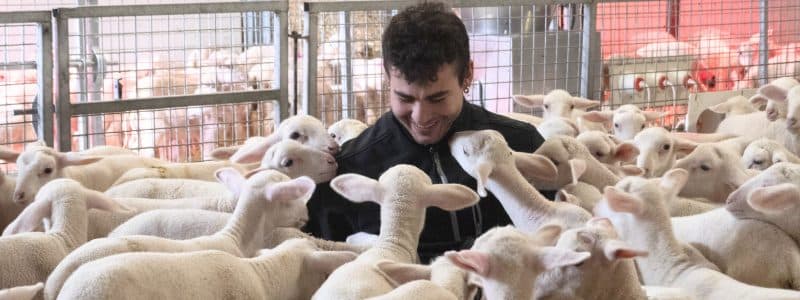

Researchers from the University of Castilla-La Mancha and the CSIC demonstrate that heat alters the quality of oocytes, compromising reproductive success in sheep.
The impact of climate change on livestock farming is not limited to pasture availability or the general stress of animals. A new Spanish study has shown that extreme heat also directly affects the reproductive capacity of sheep, a finding with significant implications for the sustainability of sheep production in warm regions.
This study, published in the prestigious Scientific Reports journal of the Nature group, was conducted by the SaBio (Health and Biotechnology) research group of the Institute for Game and Wildlife Research (IREC), a joint center of the Spanish National Research Council (CSIC), the University of Castilla-La Mancha (UCLM), and the Regional Government of Castilla-La Mancha.
A study throughout the four seasons of the year
The scientific team, led by Professor Ana Josefa Soler, evaluated the functionality of the cumulus-oocyte complex —a structure that surrounds the egg and is essential for its maturation and fertilization— in adult sheep during the different seasons of the year.
Variables such as oocyte morphology, its maturation capacity, and its potential to develop into viable embryos after in vitro fertilization were analyzed. The results showed a clear trend: during the summer months, characterized by a significant increase in temperatures, the quality of the oocytes was considerably reduced, also decreasing embryo production rates.
“We have been able to confirm that thermal stress alters the physiology of the oocytes, hindering their maturation and, therefore, their fertilization. This has a direct impact on reproductive outcomes, especially in assisted reproduction systems,” explains Ana Josefa Soler.
Implications for livestock farming in warm climates
This discovery is especially relevant for countries like Spain, where a large part of the sheep population is located in areas with intense summers. According to the research team, the phenomenon affects not only sheep in intensive systems but also herds in extensive systems, where exposure to heat is constant and prolonged.
Moreover, with the progressive increase in global temperatures, these effects could intensify, further complicating the planning of animal reproduction programs and affecting the productive efficiency of the sheep sector.
“Climate change is not a future phenomenon; it is already affecting the reproduction of our livestock species. It is urgent to develop management strategies that mitigate these effects and ensure the viability of animal production in increasingly extreme environmental conditions,” emphasizes Soler.
A call for reproductive adaptation
The study recommends exploring measures such as synchronizing oestrus in cooler seasons, using cooling systems in livestock facilities, and genetically selecting animals more resilient to heat stress. Additionally, it reinforces the need to continue researching the physiological mechanisms affected by heat, especially in species of zootechnical interest.
The full research is available in open access in the magazine Scientific Reports and represents a significant advancement in the knowledge of sheep reproductive physiology under heat stress conditions.
You may be interested in: Reproduce the atypical ovine scrapie disease faithfully
Continue reading this content
Register for free or log in to access all rumiNews content.