Water supply and quality on the farm do not always receive the attention they deserve, often seeing this aspect neglected. When discussing drinking water on ruminant farms, a fundamental aspect is biosecurity, as there are many factors that subject these farms to a high risk regarding the entry and spread of diseases.
Proper compliance with biosecurity measures will maintain a farm in good sanitary conditions, enabling greater and better quality production (Mapama.gob.es, 2017).
All animals must have a supply of clean, sufficient water with easy and direct access.
Design & Construction of the Facility
Starting with an adequate facility design will facilitate proper treatment:
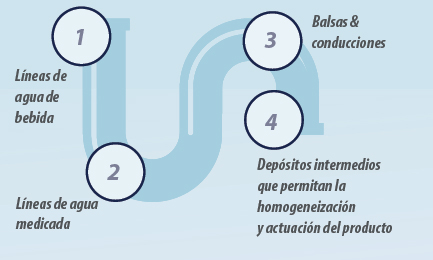
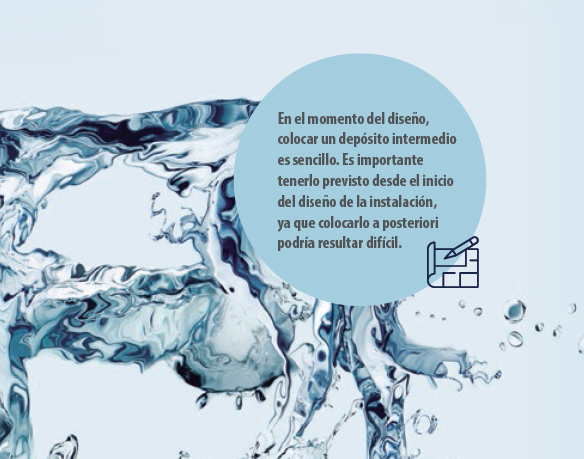
More often than we would like, we find new farms without an intermediate tank for treatment, with poorly located tanks or with inadequate dimensions.
Water Quality
It is important to know in advance the quality of the water that the animals will drink. It may seem very obvious, but on more than one occasion we have encountered new and well-designed facilities, but with water that has physicochemical characteristics not suitable for consumption and that should be treated.
Water Treatment
There are many products and equipment on the market for performing potabilization treatment, and it is necessary to choose the most appropriate option for each specific case. There is no universal solution or product that works well on all farms. It is important to remember that these are chemical products that can be corrosive or dangerous and must be handled properly.
Maintenance
The state of maintenance and cleanliness of ponds, tanks, pipelines, and drinkers affects water quality.
It is important to carry out proper potabilization treatment of the water with the appropriate equipment and products, but we cannot forget fundamental operations such as:
- Cleaning and disinfection of pipes at the end of each rearing
- Cleaning of the equipment and medication line
- Cleaning of drinkers
- Cleaning of ponds and/or tanks
Monitoring
To be able to control the microbiological and physicochemical quality of the water, it is necessary to perform at least an annual analysis if the water does not come from the public network, where we will determine:
- Physicochemical parameters pH, hardness, and conductivity
- Microbiological parameters Total coliforms, E.coli, enterococci, and Clostridium perfringens
Farm Water Control Program
It is advisable to have a control program on the farm that includes:
- The person responsible for carrying out the controls
- Diagram of the facility, control points, equipment, and products used
- Record of actions, analytical results, and corrective measures
- Action protocols and technical data sheets of the products used
We should not consider water supply and quality on the farm as secondary, both when designing new facilities and in older installations. It is important to consider external advice from companies dedicated to water treatment in livestock before making decisions.
Continue reading this content
Register for free or log in to access all rumiNews content.