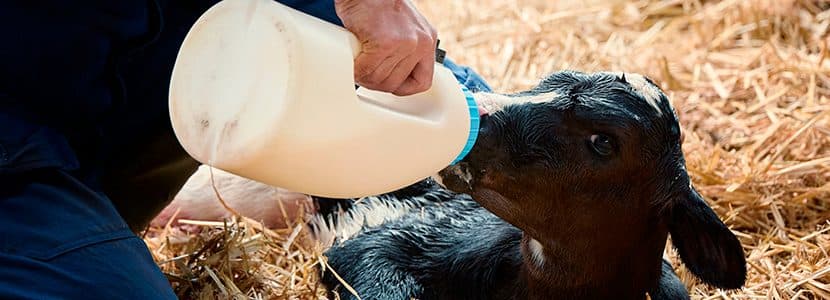

In intensive dairy goat farms, after the birth of the goat kid, it is separated from its mother and fed with colostrum during the first 24-48 hours.
After this initial period, the goat kid is fed artificial milk, making it essential to choose the right milk replacer.
What are the factors that determine the milk replacer used?
- Sex
- Genetic characteristics
- Time of year
- Selling price of the goat kid (€//Kg)
Depending on their composition, we can distinguish several types of milk replacers:
60 Milk
This is milk formulated with 60% skimmed milk powder and contributes to the formation of curd in the kid’s stomach, which is slowly digested.
0 Milk
This type of milk replacer does not include milk in its composition but is usually made up of whey, along with other raw materials that allow reaching the necessary levels of Crude Protein (CP).
Unlike 60 Milk, this type of product does not contribute to curd formation and its digestion is concentrated in the final sections of the digestive tract, requiring greater consumption to achieve the same performance as with 60 Milk.
Intermediate Milk
This is a middle ground between 60 Milk and 0 Milk.
What are the main ingredients of milk replacers?
PROTEINS
The ability of ruminants to digest non-dairy proteins during the first weeks is limited, so it is essential that the ingredients have good digestibility and an adequate amino acid profile.
- Dairy-origin proteins: skimmed milk, buttermilk, whey, and delactosed whey.
- Vegetable-origin proteins: hydrolyzed wheat, soy protein concentrate, soy flour, and pea protein concentrate.
CARBOHYDRATES
Lactose has good digestibility in young ruminants, as it produces easily absorbable glucose and galactose. On the other hand, there are other carbohydrates, such as starches and sucrose, which are difficult to digest in ruminants over 30 days old.
- Dairy-origin carbohydrates: skimmed milk powder, whey, and whey permeate.
- Vegetable-origin carbohydrates: wheat starch, rice starch, corn starch, and potato starch.
FATS
The digestibility of fats is determined by the characteristics of the fatty acids (length, degree of unsaturation, and size of the fat globule).
- Better digestibility: palm oil, coconut, soy, and rapeseed
- Poorer digestibility: fish oil, tallow, and lard
Other ingredients
The milk replacer must meet the needs of the goat kids and goats in terms of vitamins and minerals, with vitamin E being especially important.
Some additional ingredients that can also be found in milk replacers are:
- Essential oils
- Acidifiers
- Intestinal wall protectors
- Immunity enhancers
Regardless of the chosen product, it is essential to ensure it is safe and adapts to the characteristics of the farm, aiming to stimulate a quick start of feed intake, promote animal growth, and help prevent the onset of diseases.
Read the full article on the nutriNews website: How to Select a Good Milk Replacer on a Goat Farm – Ingredients and Labeling
Continue reading this content
Register for free or log in to access all rumiNews content.