|
The transition period —which includes the weeks before and after calving— is one of the most critical phases in the productive life of a dairy female, whether cow, sheep, or goat. During this interval, the animal undergoes significant physiological, metabolic, and hormonal changes that determine not only the success of calving and the viability of the offspring but also the production and quality of milk in the next lactation. |
Among the nutritional strategies available to optimize this period, the precalving block has been established as a practical and effective tool to ensure the supply of key nutrients in a controlled and consistent manner, complementing the base diet and covering specific needs that are difficult to meet solely with forage and concentrate.
 It is important to delve into what a pre-calving block is, its metabolic and productive importance in dairy ruminants, the main nutrients it should provide, and how its use can prevent metabolic disorders and improve reproductive and productive efficiency.
WHAT IS A PRE-CALVING BLOCK?
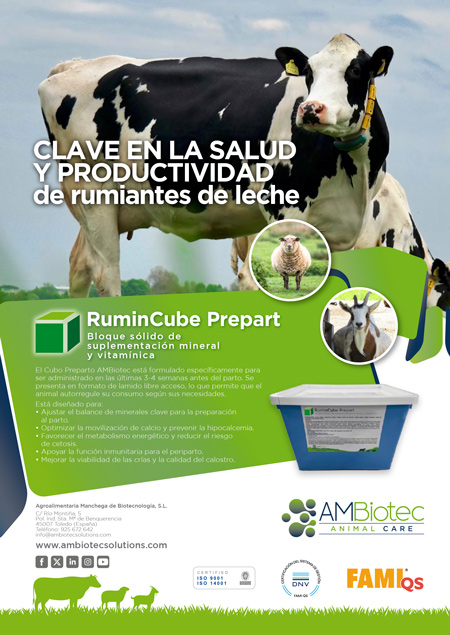
The pre-calving block is a solid block of mineral and vitamin supplementation, sometimes enriched with other functional additives, specifically formulated to be administered in the last 3-4 weeks before calving.
 It is presented in a free-access licking format, allowing the animal to self-regulate its intake according to its needs, maintaining a constant supply and avoiding peaks or deficiencies.
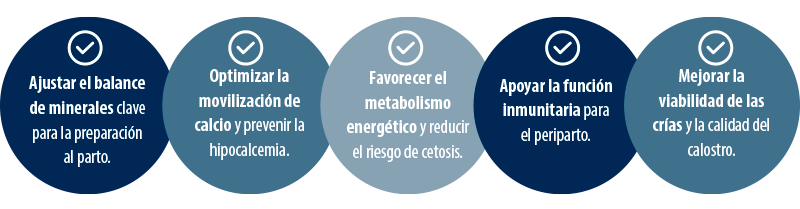
Unlike other general-use blocks, the pre-calving block is designed to:
THE METABOLIC CHALLENGE OF THE PRE-CALVING PERIOD IN DAIRY RUMINANTS
In the pre-calving period, the female’s body must cope with several critical adaptations:
Increased calcium demands 
In the hours before and after calving, the synthesis of colostrum and the onset of lactation multiply the body’s calcium needs.
 The animal must quickly activate the mechanisms of intestinal absorption and bone mobilization of calcium, and if this adjustment is not efficient, clinical or subclinical hypocalcemia appears.
Changes in energy metabolism
Feed intake capacity decreases as gestation progresses, especially in the last weeks, while the fetus continues to grow.
This causes a negative energy balance which, if severe, leads to excessive fat mobilization and risk of ketoacidosis.
Increased demand for trace minerals and vitamins
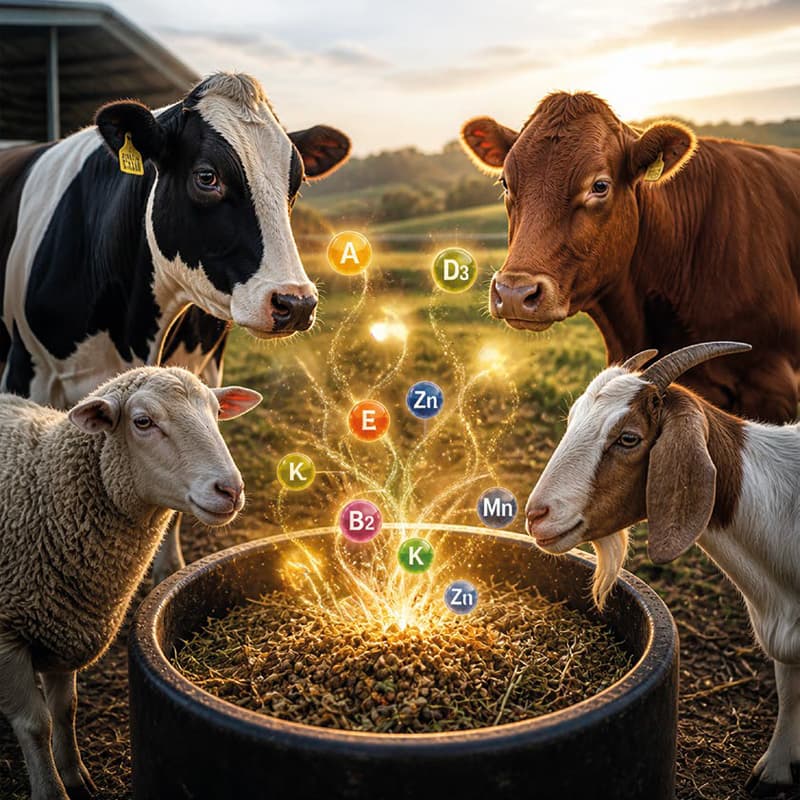
During this period, the need for selenium, zinc, copper, iodine, and vitamins A, D, and E increases, which are essential for immunity, tissue integrity, and fetal development.
Oxidative stress
Calving is an event that raises the production of free radicals, and the body requires antioxidants to prevent cellular damage and promote good recovery.
KEY FUNCTIONS OF THE PRE-CALVING BLOCK
The pre-calving block acts as an integral tool to prepare the animal for the physiological challenges of calving and the onset of lactation.
Prevention of hypocalcemia
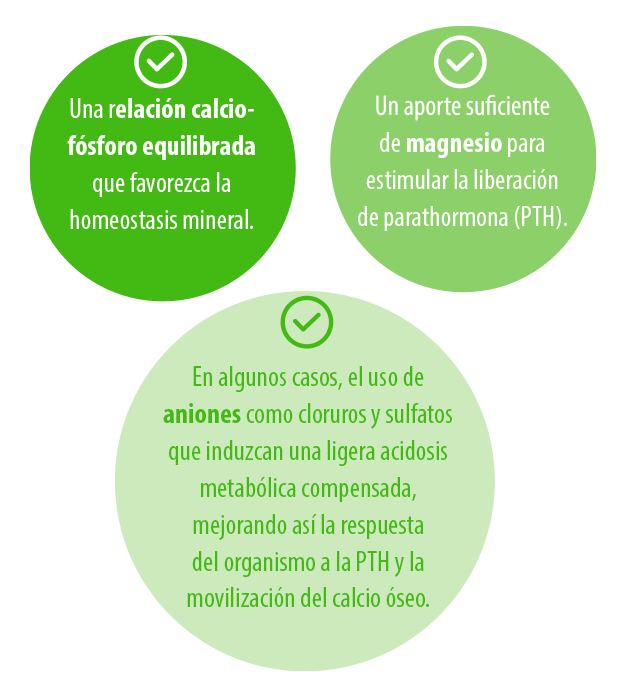
One of its most relevant benefits is the prevention of hypocalcemia, both clinical and subclinical, a disorder that not only compromises the animal’s ability to stand up and feed, but also increases the risk of retained placenta, metritis, and displaced abomasum. For this, the formulation must consider:
|
Support in energy metabolism The prepartum block provides key support to energy metabolism, incorporating glucose precursors such as propylene glycol in solid form or glycerol, which help maintain stable blood glucose levels and reduce the risk of ketosis.
|

 This supplementation is especially critical in dairy sheep and goats, where pregnancy toxemia represents a high risk due to limited intake and increased energy demands in the last weeks of gestation.
Immunity Boost A fundamental pillar is the boost of immunity and viability of the offspring. In this regard, vitamins A, D₃, and E, along with essential trace minerals such as selenium, zinc, and copper, contribute to enhancing the mother’s immune response, improving colostrum quality, and optimizing the passive transfer of immunoglobulins, thus ensuring better health status in the neonates. |

Protection against oxidative stress
The formulation also incorporates powerful antioxidants such as selenium (in organic and inorganic forms), vitamin E and plant-derived polyphenols, which neutralize free radicals generated during calving and the onset of lactation, promoting a faster recovery of the reproductive system and better fertility in the next cycle.
Improvement of digestive health and welfare
The free-access licking format not only ensures a constant and self-regulated supply of nutrients, but also stimulates salivation, improves fiber digestion and provides an occupational activity that reduces stress, especially in housed animals.
 This positive effect on welfare indirectly impacts the digestive health and productive efficiency of the herd.
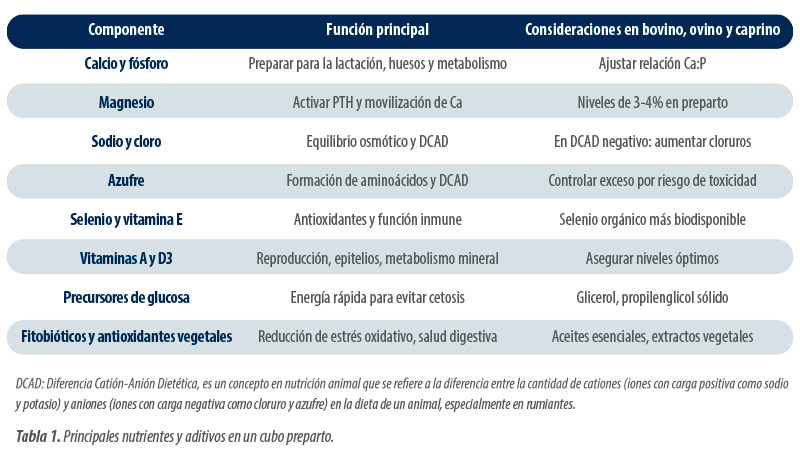
PRACTICAL DIFFERENCES BETWEEN CATTLE, SHEEP, AND GOATS
Although the principles are common, there are relevant differences:
|
Dairy sheep
Dairy goats
|
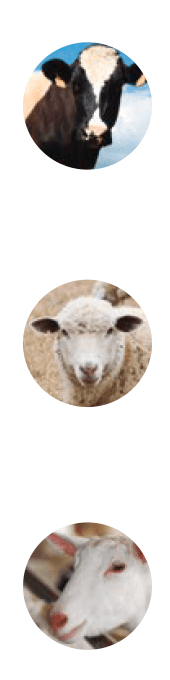 Dairy cattle
 Presents a higher incidence of hypocalcemia and displaced abomasum.
PROVEN PRODUCTIVE AND REPRODUCTIVE BENEFITS
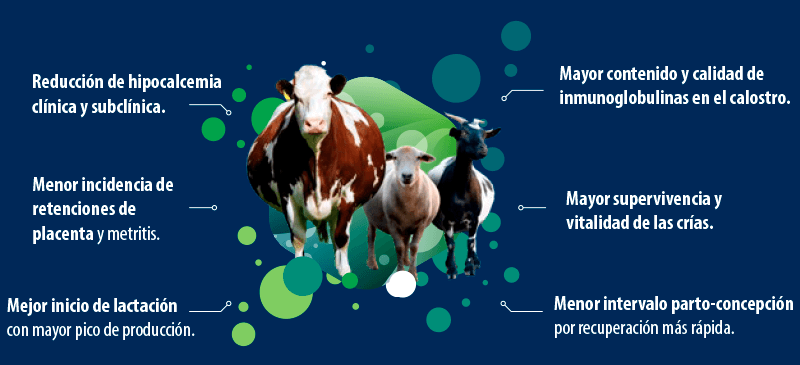
At AMBiotec we have developed a new pre-calving block designed to optimize the health, performance, and welfare of animals during the pre-calving period.
Thanks to its specific formulation and the incorporation of key nutrients in highly bioavailable forms, its use is associated with a comprehensive improvement in the productive and reproductive status of the herd, providing benefits such as:
USAGE RECOMMENDATIONS
1 Start of administration: 21 to 28 days before the estimated calving date.
2 Free access: at least one bucket for every 15-20 animals to avoid competition.
3 Location: near the resting or feeding area.
4 Consumption monitoring: the goal is moderate and consistent consumption with adjustments according to mineral analysis of the base diet.
5 Complementarity: the cube does not replace the base diet, but optimizes it.
CONCLUSION
The pre-calving cube is much more than a mineral block, it is a strategic tool that integrates nutrition, preventive health, and practical management.
In dairy cattle, sheep, and goats, its use allows to face the complex transition period with greater guarantees, reducing metabolic disorders, improving the viability of the offspring, and optimizing milk yield.
In a sector where each calving marks the beginning of a new productive cycle, investing in proper pre-calving supplementation is not an expense, but a technical decision with tangible returns in the health and performance of the herd.