

The isoacids are essential nutrients for rumen bacteria and play a crucial role in the digestive processes of ruminants.
 Known for more than 40 years, interest and research on isoacids have recently increased, as they can have a significant impact on productive responses and rumen efficiency.
These compounds are naturally produced in the rumen by the bacteria that digest starch and sugar during the breakdown of degradable proteins in the rumen.
The fiber-digesting bacteria use isoacids to produce microbial protein and digest fibers, releasing volatile fatty acids (VFAs) that are used by the cow to:
 Produce milk.
Replenish energy reserves.
Supply nutrients to the growing fetus.
 Adding the Zinpro® IsoFerm® isoacid blend directly to the ration allows enhancement of the natural fermentation process in the rumen.
 The fiber-digesting bacteria have direct access to the isoacids, which allows them to increase their functionality, providing more energy and metabolizable proteins for the cow.
|
 Supplementing diets during lactation with isoacids is especially beneficial because, under certain dietary conditions, the lack of isoacids prevents fibrolytic bacteria from reaching their full potential.
In this regard, research conducted by Ohio State University and other institutions has demonstrated the positive impact of isoacid supplementation on:
Fiber digestibility.
Microbial protein production.
Milk production.
ISOACIDS IMPROVE CIRCULATING GLUCOSE AND BODY WEIGHT LOSS AFTER CALVING
With multiple studies on lactating cows, recent attention and research have focused on transition cows.
 For example, researchers from Purdue University (Indiana, USA) conducted a study to examine the effects of feeding isoacids before calving.
The study involved feeding the cows only with isoacids for 42 days before calving and the results (Graph 1) were promising:
Regardless of their muscle reserves, the cows that received isoacids showed:
|
 Better energy status at the time of calving.
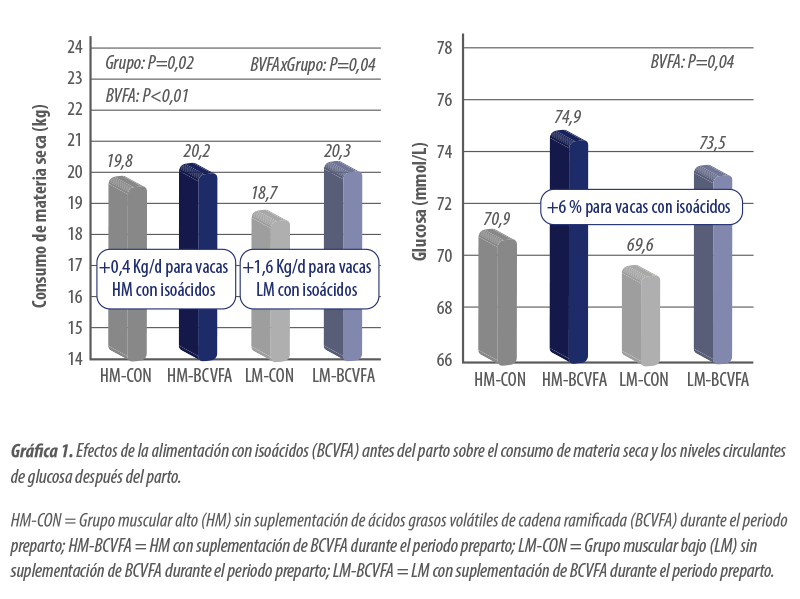
It is important to note two key points regarding the study conducted by Purdue University:
1. The dry cow ration was not deficient in rumen degradable proteins or isoacids.
Modern rations for dry cows usually contain sufficient levels of isoacids to support fibrolitic bacterial function.
 This does not imply that bacteria do not utilize additional isoacids, as a greater supply can increase microbial protein production.
The improvement in energy status at calving suggests that post-absorption metabolic effects occur with additional isoacids.
2. The cows only received isoacid supplements during the dry period, not during lactation.
 This indicates that the benefits observed after calving were a carryover effect of the ruminal and metabolic adaptations established during the dry period.
FROM RUMINAL ACTIVITY TO METABOLIC ACTIVITY
A ruminal effect cannot be ruled out, but it is most likely that a metabolic response occurs when dry cows are fed additional isoacids:
 When isoacids are not used by the ruminal microbiota, they are absorbed and can be used for energy and lipid metabolism, as the liver can use these compounds as an energy source for glucose production.
Isoacids not used by the rumen or liver can be absorbed by adipocytes, where they downregulate lipolysis.
In the transition period, when energy needs increase, the dry cow will be able to produce more microbial protein as a result of the increase in the digestibility of NDF (Neutral Detergent Fiber), which in turn improves dry matter intake before and after calving.
|
 These ruminal benefits
  A greater availability of isoacids for the liver
  The increased availability of isoacids after absorption can also
If you expect your cows to perform at their best, give them the best!
 Zinpro recommends the use of Zinpro IsoFerm* at a minimum dose of 40 g/cow/day throughout the entire dry period or at least during the period close to calving.
 Ideally, they should receive 40 g/cow/day of Zinpro IsoFerm before and after calving to achieve optimal results.
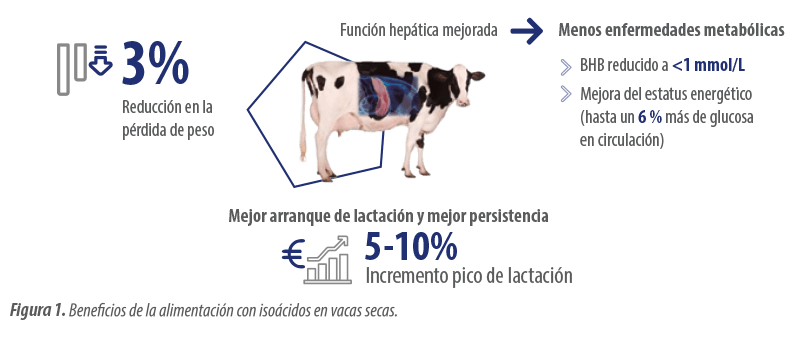
 Producers can expect to gain an additional 5% milk at the peak of lactation (a low trend) when it is only administered during the dry period.
 Cows supplemented with Zinpro IsoFerm should experience less weight loss and lower ketone bodies, contributing to better overall health and productivity (Figure 1).
CONCLUSION: THE SOLUTION FOR A BETTER TRANSITION
Isoacids play a vital role in the metabolic processes of dry cows, which improves their energy status and increases milk yield in the subsequent lactation.
 By supplementing cows with isoacids during the dry period, producers can enhance the natural fermentation process in the rumen, promote better liver function and improve the overall body condition of the cow.
|
 The use of
*Zinpro IsoFerm won the silver medal in the Innovation Award 56 category of New Products at EuroTier 2024.