

Phosphorus is a macromineral discovered in 1669 by the German alchemist Henning Brandt.
 It was a white product that glowed in the dark, hence it was named “phosphorus” which in Greek means “light bearer” ([fos] “light” – [foros] “bearer”).
THE ROLE OF PHOSPHORUS IN RUMINANTS
In animals, approximately 80% of phosphorus present in the body is found in the bones and teeth, which, in addition to providing structural support, act as a reserve of this mineral. |
The remaining 20% is distributed in other components, where it plays essential roles in biological processes such as:
|
 Energy transfer.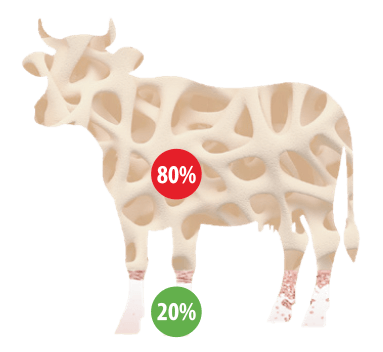
 In the case of ruminants, phosphorus is also necessary for the functioning of the rumen microbiota, where the importance of this element is twofold.
The presence of microbial phytases and phosphatases in the rumen allows them to utilize much of the phytic phosphorus present in plants.

 In this sense, the activity of the rumen microbiota is essential for the efficient digestion of forages, ensuring a better utilization of nutrients and contributing to the balance of their mineral metabolism.
PHOSPHORUS METABOLISM IN DAIRY CATTLE
Nitrogen metabolism in dairy cattle is closely related to phosphorus supply, as an insufficient intake of this mineral affects ruminal fermentation, resulting in a lower microbial protein synthesis and a reduction in nutrient digestibility.
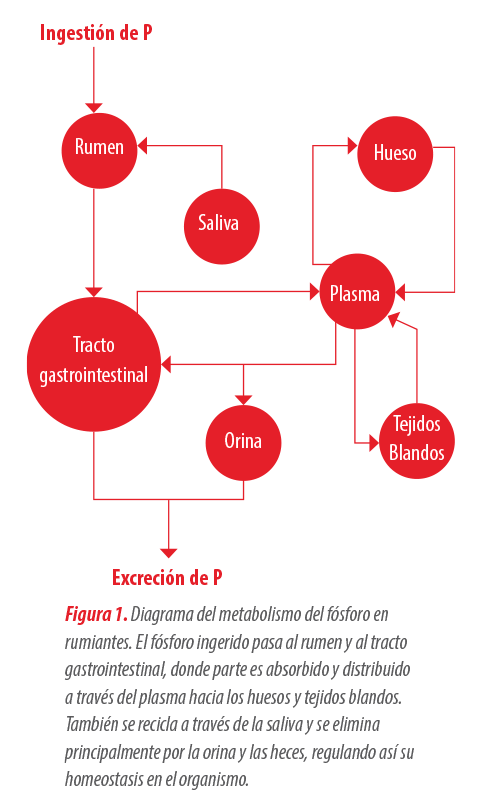
The absorption of phosphorus occurs mainly in the small intestine, and it can be:
 Retained for productive functions.
Secreted into the intestinal lumen, where it can be reabsorbed or eliminated in the feces.
The homeostasis of phosphorus is mainly regulated through recycling in saliva and endogenous fecal excretion.
 Therefore, the estimation of its digestibility based solely on the difference between intake and excretion is worthless in the evaluation of this nutrient.
IMPACT OF PHOSPHORUS DEFICIENCY AND SUPPLEMENTATION STRATEGIES
Given its importance in maintaining biological functions, a deficiency in phosphorus supply can lead to serious negative effects.
 The first signs of phosphorus deficiency are often nonspecific and, therefore, are not always immediately identified.
 Among them are the reduction in consumption and efficiency in feed utilization, which leads to a decrease in growth rate.
Behavioral alterations or pica phenomena* may also be observed.
*Behavioral disorder in which animals ingest non-nutritive or unusual substances, such as soil, wood, bones, or plastics. In ruminants, it is often associated with nutritional deficiencies, such as lack of phosphorus, sodium, or effective fiber, and can affect their health and productive performance.
If the deficiency persists, the animals will exhibit anorexia and weight loss. Additionally, depending on their productive state, problems such as:

 Decreased fertility.
Delays in conception.
Lower milk production.
Additionally, this macromineral can be present in foods of plant, animal, or mineral origin, which influences its availability and utilization by the animal. |
 To prevent its deficiency,
 PHOSPHORUS AND THE ENVIRONMENT: CHALLENGES IN ITS MANAGEMENT
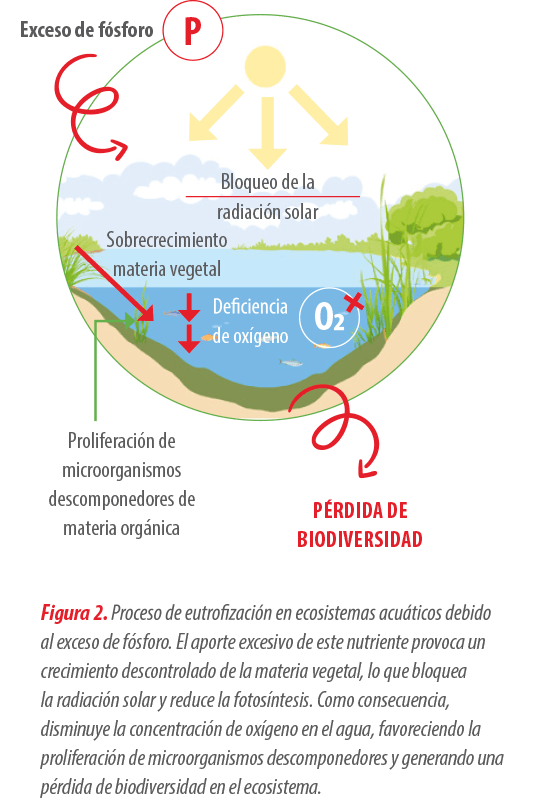
Currently, phosphorus is considered a key factor in the eutrophication processes of soils and aquatic ecosystems.
 An increase in its concentration in these environments promotes the excessive growth of plant matter, which hinders the transmission of solar radiation, reducing photosynthesis and the oxygen level in the water. Simultaneously, it increases the activity of microorganisms decomposing organic matter and, consequently, oxygen consumption.
These changes alter ecosystem conditions, decreasing biological diversity and affecting aquatic fauna. |
From an environmental point of view, it is essential to adjust the phosphorus content in the rations to avoid excessive supply, as animals excrete it into the environment, generating a significant impact on ecosystems. |
Not all ingested phosphorus is absorbed!
 In the case of green forages from permanent pastures or cereals, absorption reaches approximately 70%, while in grain cereals it reaches 75%.
The absorbed phosphorus that is not retained in tissues or products is eliminated through urine or recycled to the digestive tract via saliva, to be finally reabsorbed or expelled in the feces.
The amount of phosphorus excreted through urine increases as the mineral intake increases, but it represents a very small proportion compared to the phosphorus excreted in feces, where phosphorus from different sources is eliminated, leading to different fractions:
 The phosphorus provided by the feed that has not been absorbed.
The phosphorus associated with digestive secretions and cells of the
digestive tract that detach from the wall.
The phosphorus associated with the microbial population that is excreted in feces.
The phosphorus recycled with saliva that has not been reabsorbed or used by the microbial population.
The excretion of phosphorus into the environment increases as its intake increases. However, this increase mainly comes from the ingested phosphorus that has not been absorbed, as endogenous excretion, known as “inevitable losses,” remains relatively constant. |
NUTRITIONAL RECOMMENDATIONS TO OPTIMIZE PHOSPHORUS IN THE DIET
Until relatively recently, diet formulation has been based on broad safety margins, which, in many cases, has resulted in an excessive phosphorus supply.
 Maintaining optimal phosphorus levels in the diet is essential, as it promotes fertility, feed intake, milk production, and bone health. Additionally, in growing animals, an adequate intake of this mineral prevents skeletal deformation and ensures optimal feed efficiency.
 To preserve animal health and optimize both milk yield and growth, it is essential to correctly adjust phosphorus levels in the diet.
Currently, thanks to modern rationing systems and the use of precision nutrition criteria, it is easier to fine-tune mineral formulation and avoid unnecessary excesses. |
Recommendations on phosphate supply vary considerably. However, it is considered that a ration with an average of 3.5 g of phosphorus/kg of dry matter is sufficient for a lactating cow with a milk yield of 10,000 kg.
As a reference, the following nutritional guidelines can be followed:
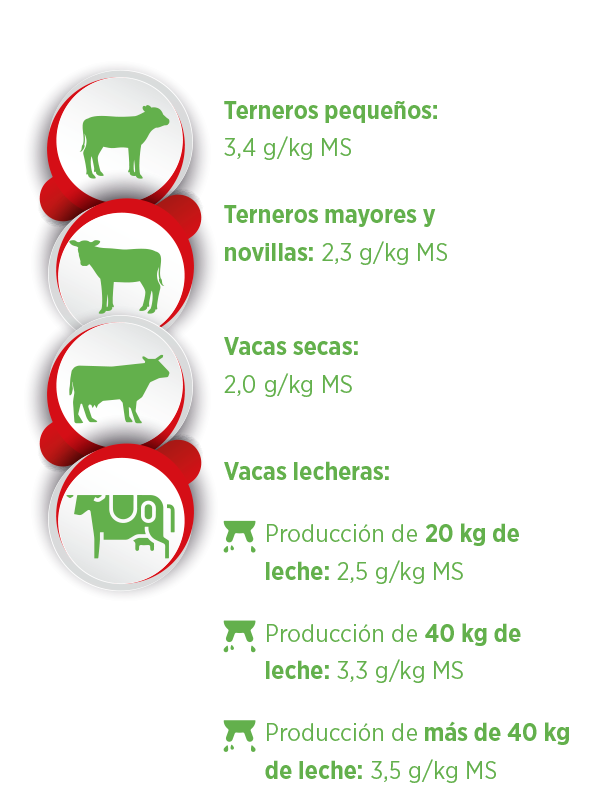
Most diets fall within a range of 0.32-0.38 g of phosphorus per 100 g of dry matter, in line with current NRC recommendations for Holstein cows, depending mainly on the level of milk production. |
However, a significant percentage of rations exceed 0.38 g/100 g DM, which can result in phosphorus excretions exceeding 60 g/day per animal.
This excess not only represents a financial waste, but also has a considerable environmental impact, especially if the slurry or manure is not managed properly, contributing to soil and water pollution.
OPTIMIZATION OF PHOSPHORUS IN THE DIET: REDUCTION WITHOUT COMPROMISING PERFORMANCE
The reduction of phosphorus in the diet of dairy cows must be carried out without compromising their productive performance, being essential to ensure an adequate supply that allows optimal rumen function, especially in cellulose digestion.
 An insufficient phosphorus intake can affect the rate of ruminal fermentation, decreasing nutrient digestibility and reducing the efficiency in microbial protein production.
As a consequence, both metabolism and nitrogen utilization can be affected by an inadequate level of phosphorus in the diet.
In recent years, numerous studies have analyzed the nitrogen and phosphorus requirements in dairy cattle with the aim of minimizing their excretion. However, most of these investigations have evaluated one nutrient in isolation, keeping the concentration of the other fixed.
To address this limitation, a group of researchers from China conducted a study in which they analyzed the effect of the simultaneous variation of protein and phosphorus levels in the diet.
|
 The results revealed that reducing crude protein from 17% to 15% and phosphorus from 0.44% to 0.34-0.39% does not affect feed intake, digestibility, ruminal fermentation, milk yield, or plasma metabolites.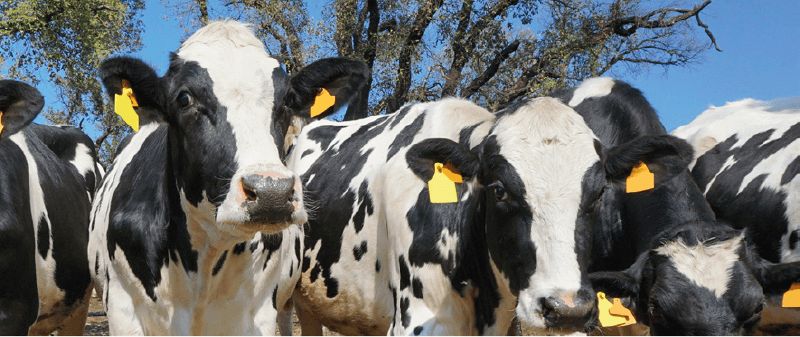
REGULATION AND SUSTAINABILITY: PHOSPHORUS MANAGEMENT REGULATIONS
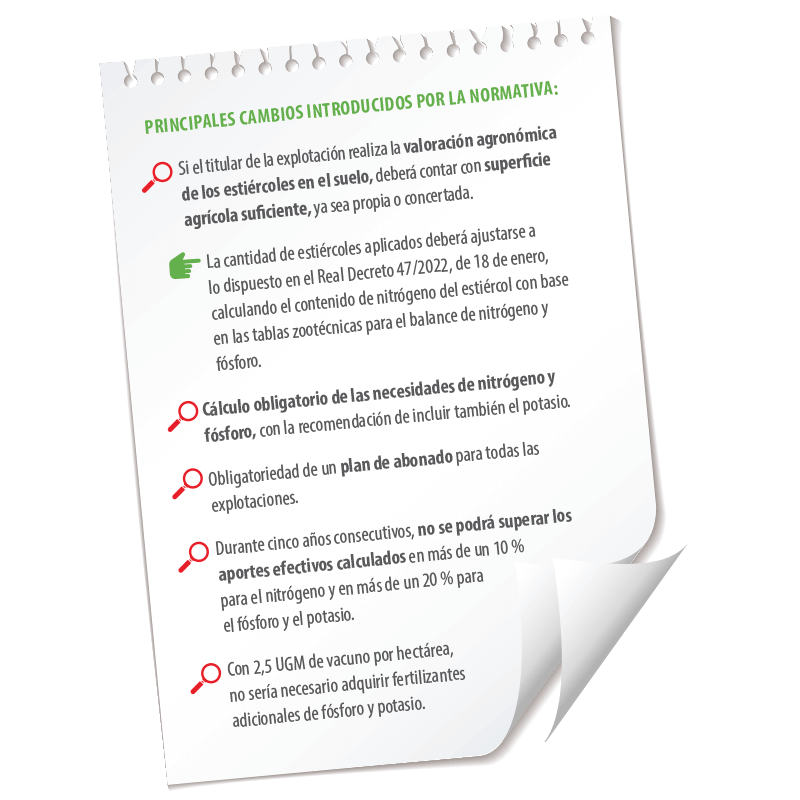
The Royal Decree 1051/2022, of December 27, which establishes rules for sustainable nutrition in agricultural soils consolidates the announced changes in the management of slurry and fertilizers, regulating how, when, and how much phosphorus can be applied to agricultural land.
 The main objective of this regulation is to reduce gas emissions, especially ammonia, and prevent water and soil contamination.
PHOSPHATE REDUCTION PLAN: THE NETHERLANDS’ PROPOSAL
In recent years, environmental regulation in the European Union has driven stricter measures to reduce the impact of livestock farming on the environment.
In this context, the Netherlands has implemented a phosphate reduction plan with the aim of reducing emissions from dairy production. However, this strategy entails significant consequences for the sector, affecting both the livestock census and milk production.
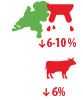 The Phosphate Reduction Plan foresees a decrease in milk production by between 6% and 10%, as well as a reduction in the number of cows by 6%.
The Hague Government has designed five work areas with which it expects to reduce phosphate emissions by 10.8 million kg, exceeding by 4.2 million kg the initially required amount. |
According to USDA estimates, this environmental strategy could lead to a 6.6% reduction in the dairy cattle census, placing it at 2.27 million animals.
 Thus, depending on the measures adopted by producers to meet the objectives, Dutch milk production could decrease by between 6% and 10%.
|
 To achieve the proposed phosphate reduction targets, the plan is structured into several key measures, each with a direct impact on livestock production and the dairy cattle census.
1. Reduction of phosphates in the dairy sector (4 million kg of phosphates)
Dairy producers will be required to reduce their production or herd size based on a 2015 reference period.
 All farms must pay a fee that will increase if they do not meet the established requirements.
Those farms that reduce their census below the limit may receive an economic incentive, funded by the revenue generated by this fee.
It is estimated that around 60,000 cows will be slaughtered as a result of this measure, although some could be exported to other EU countries or third markets.
2. Closure of farms (2.5 million kg of phosphates)
To encourage the reduction of livestock census, three bidding rounds will be implemented in which the economic incentive will progressively decrease to encourage early adoption of the measure.
A premium of €1,200 per cow slaughtered will be offered, in addition to an advance payment linked to the phosphate right.
The total cost of the plan is estimated at 50 million euros.
This measure is expected to lead to the culling of approximately 100,000 cows.
3. Adjustments in feeding (1.7 million kg of phosphates)
Restrictions will be established in the formulation of feeds to reduce the amount of phosphorus ingested by the animals:
The average phosphorus content in the ration must be limited to 4.3 g/kg of feed.
A phosphorus/protein ratio of 2.2% will be established in order to optimize nutritional efficiency and reduce phosphate excretion into the environment.
THE PATH TOWARDS EFFICIENT AND SUSTAINABLE PHOSPHORUS MANAGEMENT
The efficient management of phosphorus in animal feeding is key to achieving a balance between productivity and sustainability. In this context, the following key points should be highlighted:
 Optimizing ration formulation through precision feeding significantly reduces phosphorus excretion in manure, minimizing its environmental impact without affecting production.
Adjusting phosphorus levels in the diet to avoid unnecessary excesses, maintaining the productive performance of the animals and optimizing production costs.
Correctly evaluating phosphorus levels in forages to adjust their inclusion in the diet and avoid overfeeding with mineral sources.
Consider the fertilization plan of the farms, ensuring efficient management of slurry and manure to optimize phosphorus use in soils.
Implement a phosphorus input reduction plan, always ensuring that the nutritional needs of the animals are met.
 Ultimately, the current challenge is not only to meet the requirements of the livestock, but to do so in an efficient and responsible manner, aligning animal production with the criteria of sustainability and profitability.
Continue reading this content
Register for free or log in to access all rumiNews content.