Free radicals and other oxidants have gained importance in the field of biology due to their main role in various physiological conditions, as well as their involvement in a wide range of diseases.
 Free radicals are a consequence of normal cellular metabolism. They are composed of reactive oxygen species (ROS) and reactive nitrogen species (RNS).
A free radical can be defined as an atom or molecule that contains one or more unpaired electrons in its valence shell or outer orbit, and is capable of existing independently. The odd number of electrons in a free radical makes it unstable, short-lived, and highly reactive.
Due to their high reactivity, they can extract electrons from other compounds to achieve stability. Thus, the attacked molecule loses its electron and becomes a free radical, initiating a chain reaction that ultimately damages the living cell.
 The antioxidants are defined as substances that prevent, delay, or eliminate oxidative damage to a target molecule. They can be synthesized in the body or derived from the diet.
At moderate or low levels, ROS/RNS have beneficial effects and participate in various physiological functions, such as in immune function, in several cellular signaling pathways, in the mitogenic response, and in the regulation of redox activity.
 But at higher concentrations, both ROS and RNS generate oxidative stress (OS) and nitrosative stress, respectively, causing potential damage to biomolecules.
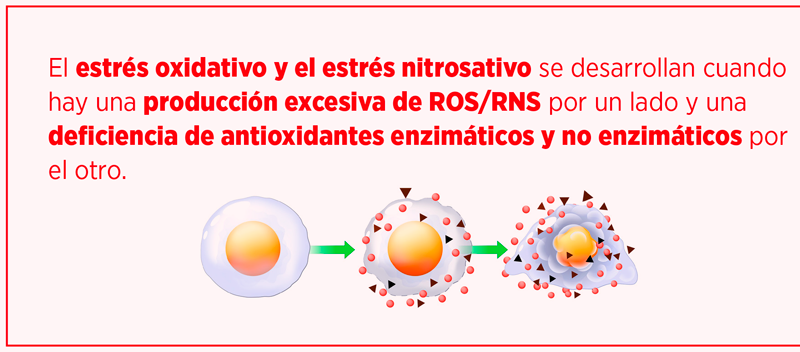

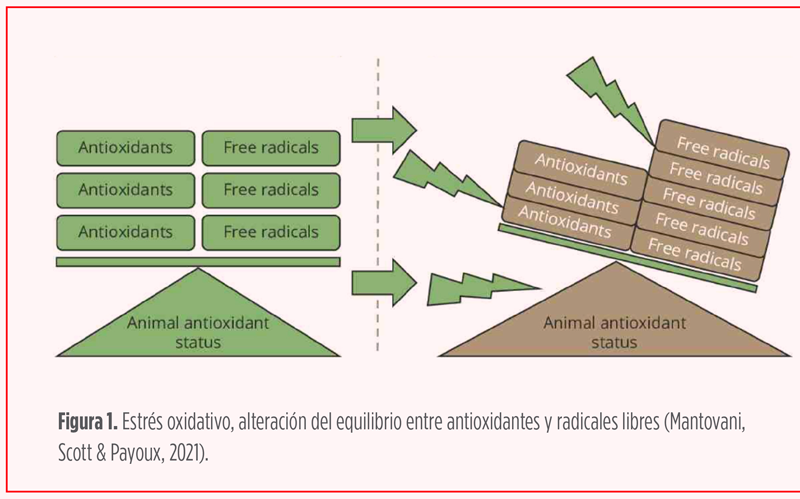
The most important thing is that excess ROS can damage the integrity of various biomolecules, including lipids, proteins, and DNA, leading to an increase in oxidative stress (OS). In other words, oxidative stress is an imbalance between free radicals and antioxidants in the body, which can cause cellular and tissue damage.
The amount of physiological reactive oxygen species (ROS) plays an important role in the regulation of reproductive processes, such as folliculogenesis, oocyte maturation, the corpus luteum, uterine function, embryogenesis, embryonic implantation, and feto-placental development.
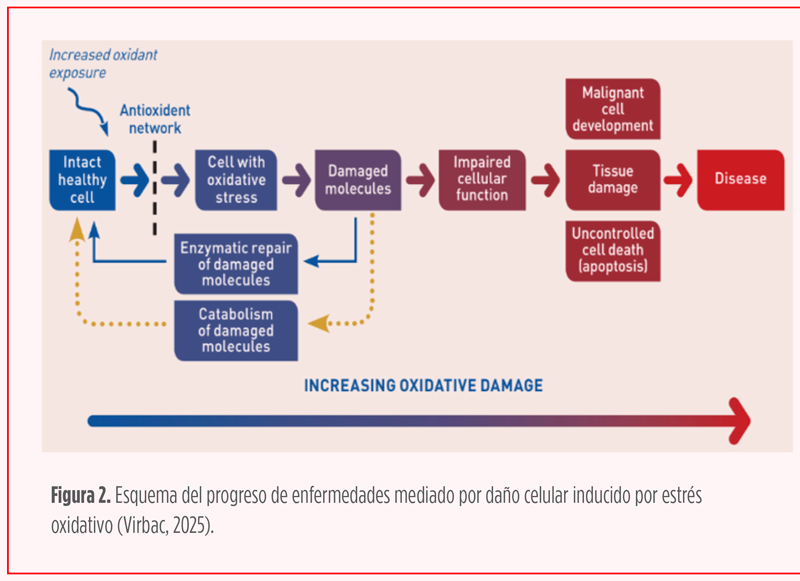
The increase in oxidative stress is initially counteracted by the body’s antioxidant network. Damaged molecules are repaired or degraded, and controlled cell death (apoptosis) may be initiated if additional oxidative damage leads to cellular dysfunction.
However, when these signaling cascades are affected or the oxidative damage exceeds the capacity of the organism’s defense mechanisms, the uncontrolled cell death, the tissue damage and the development of malignant cells can progress towards pathological states.
Oxidative stress has been linked to production diseases, reproductive diseases, and metabolic diseases such as ketosis, fatty liver, and even hypocalcemia. These include both maternal diseases, those associated with various processes such as retained placenta, udder edema, or mastitis, as well as fetal growth.
Furthermore, oxidative stress compromises the stability of color and freshness, tenderness, juiciness, and oxidative stability of the meat, in addition to reducing its shelf life.
 If there were an excess of ROS, we would have oxidative stress (OS), and if there were an excess of antioxidants, we would have a deficit of oxidants. That is, a deficit in oxygen utilization, which would be as negative as oxidative stress itself, since, besides the fact that no one wants to live with an oxygen deficit, its low presence implies a decrease in the individual’s productive capacity.
 The balance must be our virtue and our goal, and we must avoid both extremes as much as possible. It is also true that a certain degree of oxidative stress is not always harmful, as it helps the organism to stay “tense or alert,” ready to respond to special circumstances that may occur, such as a change in demands due to a change in the productive state of the cattle.
Regarding oxidative stress and milk production, although it is not a disease in itself, it is worth highlighting the link between the two.
 It is evident that, in the postpartum period, the demand for milk production is greater than during gestation. This induces a maximum energy requirement in the animal, leading it to enter a negative energy balance, which forces the activation of catabolic pathways in search of energy. In turn, this process will end up generating a high number of free radicals.
The productive level achieved will indirectly depend on the oxidative balance of the animal during this phase. Obviously, the higher the milk production, the more oxidants will be produced by the metabolization of oxygen.
Unfortunately, dairy cows experience various effects of oxidative stress from calving to the peak of lactation. Dietary background, as well as different ranges of body condition, affect the state of oxidative stress, with specific implications on the biological characteristics of milk and blood, mediated by specific molecular pathways.
Cows with higher body condition are more susceptible to oxidative stress. To optimize performance, OS in high-producing cows should be controlled by providing antioxidant nutrients and minimizing the effects of substances that stimulate ROS production.
 The peripartum and early lactation periods are critical for the health of dairy cows. Supplementation with dietary antioxidants is especially important during the peripartum period, when plasma levels of alpha-tocopherol are lower.
Infections and tissue repair are common even in well-managed calves, and cows may experience some degree of immune response, especially after calving.
Stress, diseases, and activation of the immune response increase nutrient requirements, including essential vitamins and trace elements.
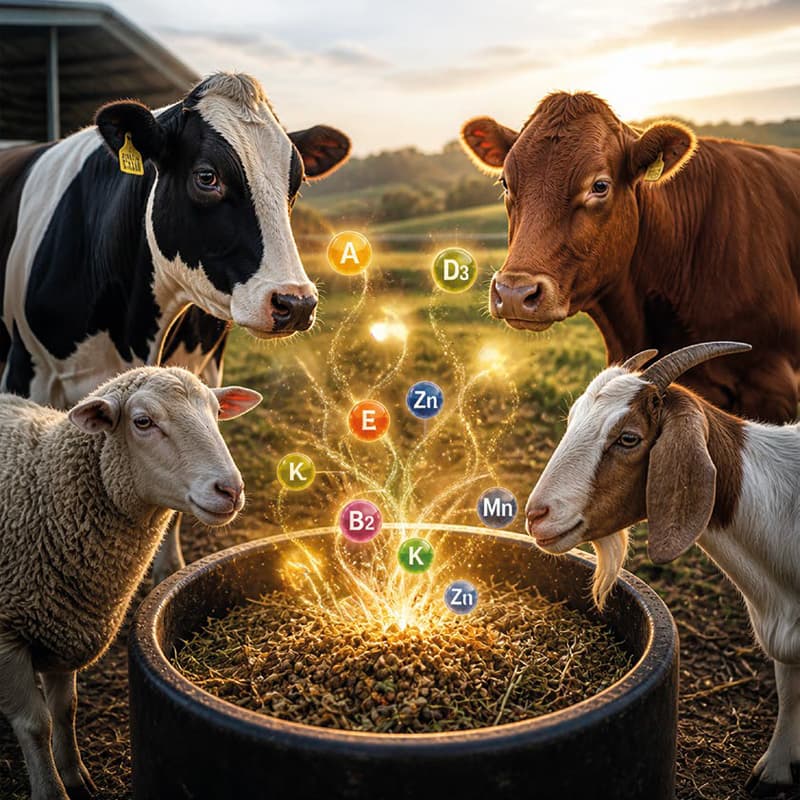
 For this reason, supplementation with nutrients necessary for antioxidant defense, in adequate and balanced amounts, is beneficial.
It is significant that, in livestock, periods of high demand that cause accelerated cellular metabolism —such as infections, calving, drought, and heat stress—, as well as embryonic and fetal development, increase the risk of oxidative stress and, as a result, reduce performance.
 Additionally, mycotoxins also cause oxidative stress in livestock.
Previously, it was believed that vitamins E and C were the only effective solution to combat EO.
MiaPhenol from Miavit GmbH is an innovative blend of two different polyphenolic compounds with different antioxidant activities (water and fat-soluble antioxidants) that relieves oxidative stress.
The most effective polyphenols for managing free radicals have high bioavailability and are active in both lipid and aqueous tissues.
The water-soluble component of MiaPhenol allows the identification of free radicals and transfers them to the enzymatic system for neutralization, thus supporting vitamin C.
The lipophilic compound of MiaPhenol enhances the stability of the cell membrane. This multilevel antioxidant effect of MiaPhenol supports natural enzymatic protection and protects the body’s vitamin E reserves to boost effective immune function.
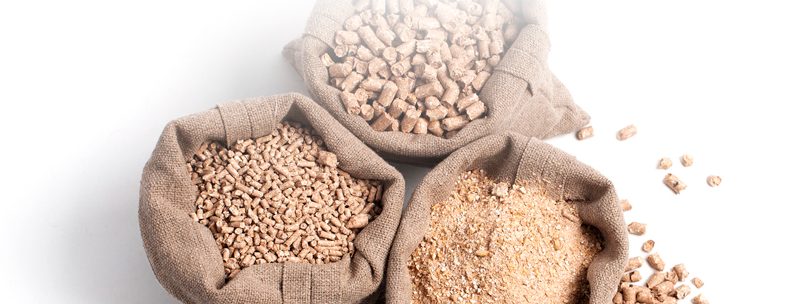
The active ingredients of MiaPhenol are thermostable. It can be included in pelleted feeds, in premixes, or administered separately at the farm level.
You may be interested in: What is fiber? – A guide to understanding and quantifying its value