|
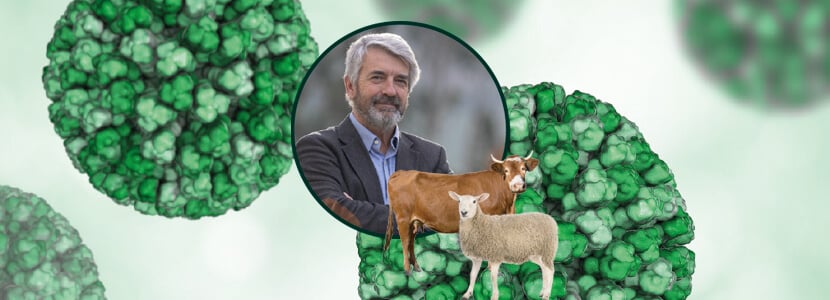
 Manuel Cerviño, ruminants technical advisor at Boehringer Ingelheim Animal Health Spain, analyzes a disease that has captured media interest due to the complicated situation in our country and talks to us about the role of vaccination.
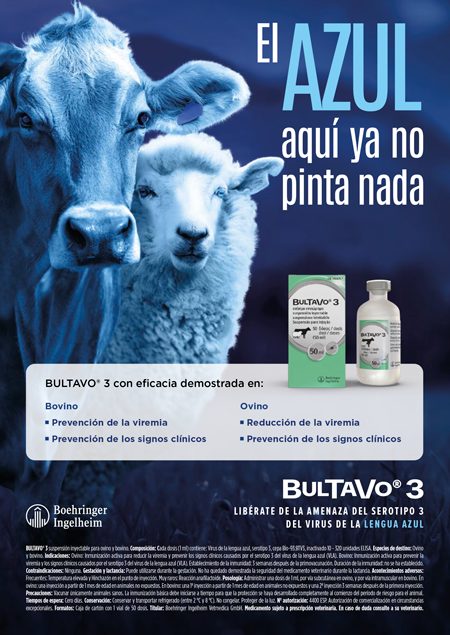
Boehringer Ingelheim, a leading company in animal health, recently announced the marketing authorization, under exceptional circumstances (articles 25 and 26 of Regulation EU 2019/6) of BULTAVO® 3, a new vaccine against the serotype 3 of Bluetongue.
 What are the most relevant aspects of Bluetongue?
 Bluetongue (BT by its initials in English, Bluetongue) or Ovine Catarrhal Fever is a disease:
 Infectious
Non-contagious
Notifiable
Viral origin
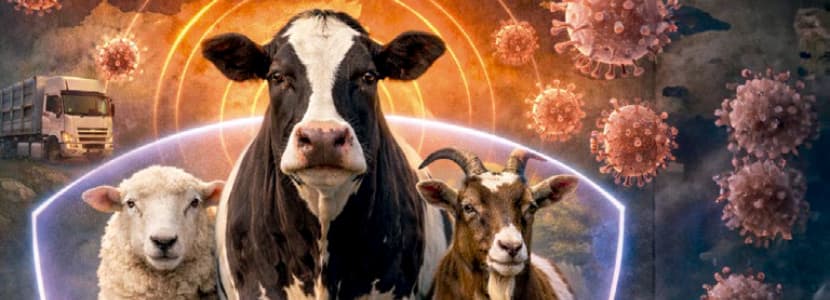
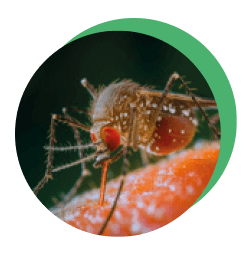
Transmitted by the bite of certain species of insects of the genus Culicoides
It affects both domestic and wild ruminants.
It has been described in sheep, which is perhaps the most affected species and considered the main host.
It has also been diagnosed in goats, cattle, buffalo, antelopes, deer… Infection has even been observed in other non-ruminant species, such as the shrew or the dog, although with little epidemiological and clinical relevance.
The cause of the disease is a virus from the Reoviridae family, Orbivirus genus, of which more than 30 serotypes are known.
|
 There is no cross-protection between the different serotypes, which facilitates the spread of the disease and complicates vaccine prophylaxis, as it becomes necessary to vaccinate specifically against each serotype.
How is the disease diagnosed?
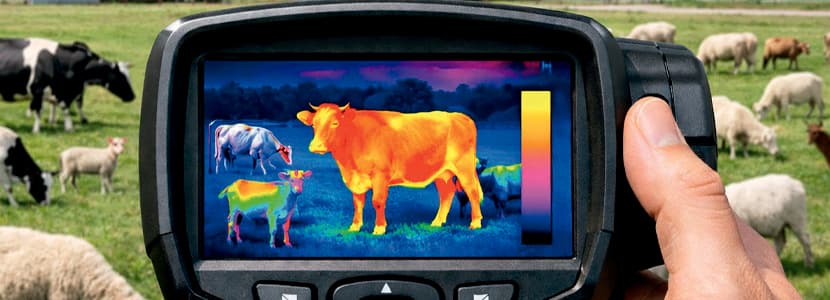
The diagnosis is initially based on the appearance of characteristic clinical signs, which are not pathognomonic, and on the confirmation of the presence of vectors in the area.
The confirmation is carried out through laboratory tests, which must be conducted in the diagnostic laboratories of the Autonomous Communities or in the National Reference Laboratory for Bluetongue (Central Veterinary Laboratory of Algete), as it is a Notifiable Disease.
|
 Diagnosis is based on the
 The severity of the disease depends on the serotype and the species.
Among domestic animals, sheep are the most affected, while in goats and cattle it may occur asymptomatically, although they do play an important role in transmission.
|
 Regarding the serotypes circulating in our country, serotype 3 is proving to be the most aggressive.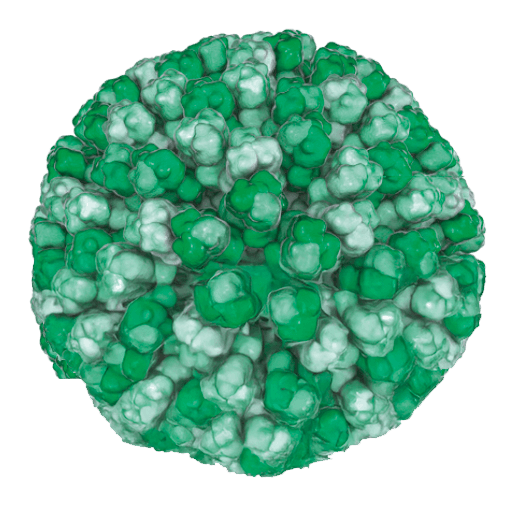
What is the current situation of Bluetongue in Spain?
In Spain, we have a complicated situation, as the virus is distributed throughout the peninsula.
 The isolated serotypes are 1, 3, 4, and 8, and in each update of the situation of these serotypes by the Ministry of Agriculture, Fisheries and Food, we find new affected areas.
This disease has always been considered seasonal, but in recent years, winters are becoming milder and, consequently, the survival of culicoides is increasing.
 The latest information published by the Ministry indicates that the entire peninsula is “status-free” territory for serotypes 1, 3, 4, and 8.
This implies that vaccination is voluntary and movement is not restricted.
 The Canary Islands are free of the disease, and in the Balearic Islands, an eradication program is being followed.
In the rest of the country, for the moment, work is being done to contain the disease so that we can coexist with it.
Bluetongue is not a zoonosis, so it does not constitute a public health problem. Its importance lies in the production losses and the obstacles imposed on the trade of animals from affected areas. |
You have talked about the control and eradication of the disease. What measures are being taken to contain the virus?
The World Organisation for Animal Health (WOAH) indicates what measures must be taken against Bluetongue (BT).
 These measures are included in the legislation of the European Union and at the national level, specific regulations are established as outlined in the Practical Operations Manual in the Fight Against Bluetongue.
The fight against the disease is based on the following actions:
|
 Serological surveillance program to detect the presence of infected animals early.
What role does vaccination play among all these measures?
Vaccination is recommended, and considered by the OIE and the European Union (Directive 2000/75/EC) as an effective method for the control and eradication of Bluetongue.
 Through the correct vaccination of susceptible livestock, not only is the clinical symptomatology alleviated, but it is also possible to limit, and even completely prevent viral replication in animals that may become infected, and thereby control the circulation of the serotypes against which they have been vaccinated.
Personally, I consider that the development of vaccines represents one of the greatest advances, if not the greatest, in human and animal health. Moreover, in diseases like this, where transmission depends on vectors that are very difficult to control and where environmental factors play a fundamental role, vaccination is practically the only truly effective measure.
|

In 2024, in Spain, a series of exceptional circumstances occurred:
1 The simultaneous circulation of four serotypes at once.
2 The logistical difficulty of vaccinating against the four serotypes.
3 The lack of available vaccine.
This led the authorities to reconsider the eradication program, replacing it in most of the territory with a clinical protection strategy based on the voluntary vaccination of animals susceptible to the disease, eliminating the obligation for animals subject to movement within this area to have been previously vaccinated against the present serotypes. |
What vaccines are currently available? Are they safe?
The variety of vaccine types is large.
Non-replicative vaccines Non-replicative vaccines have been developed, achieved:
|
Replicative vaccines Replicative vaccines have been produced:
|
Currently, in our market, only inactivated whole virus vaccines and live attenuated virus vaccines, monovalent, or at most against two serotypes are available.
|
Boehringer Ingelheim has recently launched a vaccine against BTV serotype 3, Bultavo® 3. What motivated this decision?
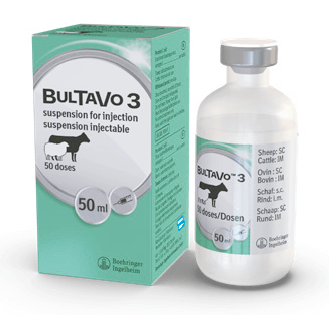 Boehringer Ingelheim enters this market with Bultavo® 3 with the firm purpose of effectively contributing to maintaining a sufficient stock of vaccines in Spain to facilitate the control and even eradication of the disease.
|
 Boehringer Ingelheim
 What does Bultavo® 3 offer?
Bultavo® 3 is a monovalent, inactivated vaccine against serotype 3 of Bluetongue, registered for use in cattle and sheep.
It contains a dual adjuvant, based on Aluminum hydroxide and Quil A specifically selected to develop a complete response, both humoral and cellular.
 We must not forget that the causative agent is a virus and, therefore, a comprehensive immune response must be ensured.
However, if there is something to highlight about Bultavo® 3 it is that it has demonstrated its ability to completely prevent the viremia typical of the infection and clinical signs in cattle, as stated in its technical data sheet. |
 Most vaccines available in our market are designed to reduce the viremia resulting from the infection and reduce clinical symptoms.
 Undoubtedly, this is a very relevant feature in disease control, as the spread of the virus depends on viremia.
 If we add to this that it triggers effective immunity three weeks after the primary vaccination schedule, I believe this vaccine is very interesting for the control or even eradication of Bluetongue serotype 3 in our country. Furthermore, to date and after many doses applied, we have had hardly any reports of undesirable reactions.
|

ACCESS TECHNICAL DATA SHEET OF BULTAVO® 3