|
 Winning work of the Young Talents contest of
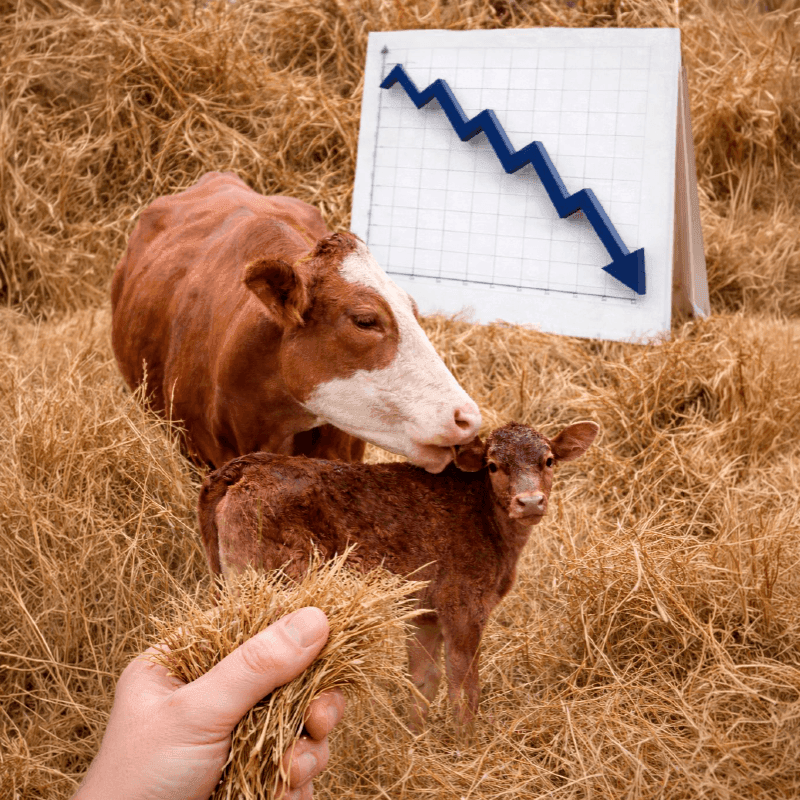
Gestational UndernutritionThe selection objectives of beef cattle currently aim to improve productive performance. This condition increases their physical and nutritional needs, which can cause a negative energy balance during the last third of gestation.
|
 At certain times of the year, herds go through periods of gestational undernutrition, especially when pasture availability is scarce due to the season or a high stocking rate.
 It may also be due to a cost reduction strategy on the farm by restricting the diet (Sanz et al., 2024). This situation can affect the ability of pregnant cows to meet the homeorhetic requirements of fetal growth.
 The lack of physiological adaptation disrupts homeostasis, generating metabolic stress and compromising both maternal health and the calf’s health, as well as its antioxidant capacity against lipid peroxidation processes (Abuelo et al., 2019).
 The different Spanish breeds can develop a different metabolic response, influencing the welfare of the calves. Metabolic stress is defined as the imbalance in physiological homeostasis caused by abnormal use of nutrients, whether due to excess or deficiency of them (Lacetera, 2026). If this stress is intense or prolonged, the animal’s energy expenditure to face it will increase.
 Metabolic stress manifests through catabolic responses, which can lead to excessive lipomobilization, immune and inflammatory dysfunctions, and oxidative stress (Abuelo et al., 2019), which in turn can result in metabolic diseases or in clinical and subclinical disorders, very common in dairy farming (Sordillo y Raphael, 2013).
For example, calves born to cows that experienced oxidative stress during the last third of gestation showed an altered immune response and increased oxidative stress, which is associated with greater susceptibility to diseases (Ling et al., 2018).
 In this regard, the Pirenaica and Parda de montaña breeds, similar in their adult stage, could respond differently to this metabolic challenge in their rearing stage, as the former show a lower birth weight than the latter.
|
 The aim of the present study was to evaluate the impact of undernutrition during the last third of gestation, breed, and their interaction on the levels of lipid peroxidation markers (MDA), total antioxidant capacity (ABTS) and the expression of key genes in the antioxidant response (SOD2, CAT, GPX1, and NRF2) in blood of newborn beef calves.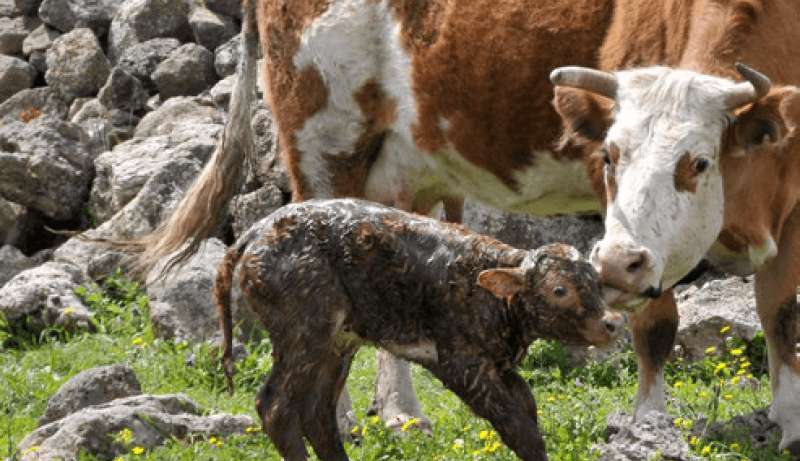
EXPERIMENTAL DESIGN
A total of 37 cows in the last third of gestation, aged between 5 and 8 years, were assigned to a 2 × 2 factorial design. The study included two levels of nutritional needs coverage through a complete mix:
Group T100 % (n = 10): cows that covered 100% of their energy needs, with a daily intake of 10.5 kg.
T60% Group (n = 9): cows that covered 60% of their energy needs, with a daily intake of 7 kg.
Two breeds were considered in the experimental design:
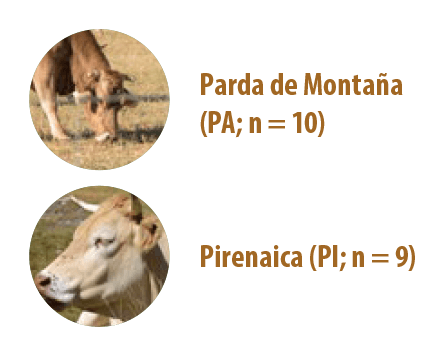
 After calving, all cows received the same diet, which fully covered their nutritional needs.
The chemical composition of the total mixed ration was:
- 111 g of crude protein (CP)/kg of dry matter (DM).
- 529 g of neutral detergent fiber (NDF)/kg DM.
- 9 g of ether extract (EE)/kg DM.
- 161 g of starch/kg DM.
Blood samples were taken from the jugular vein in the first and fifth week of the calf’s life, in Tempus RNA tubes (Applied Biosystems) for the analysis of the expression of the genes NRF2 (Nuclear Factor Erythroid 2), SOD2 (superoxide dismutase 2), CAT (catalase), and GPX1 (Glutathione Peroxidase 1), using qPCR and calculation of their relative quantification (RQ) with respect to reference genes, and in heparin tubes for the analysis of malondialdehyde (MDA) and ABTS.
|
 The data were analyzed using the JMP Pro17 program (SAS Institute Inc. Cary, NC, USA), utilizing mixed models with repeated measures that included feeding level and breed as fixed effects, as well as their interactions. Mean comparisons were performed with Tukey’s test. Results are presented as means ± standard error.
RESULTS
 The breed significantly affected the live weight (LW) of the calf at birth, with higher weights in the Parda de Montaña breed than in the Pirenaica (51.32 ± 1.13 vs 42.84 ± 1.2, respectively, P < 0.001).
The total MDA concentration, a marker of pro-oxidative activity, was higher in PA-T100% calves than in PA-T60% (4.08 ± 0.15 vs. 3.39 ± 0.17 μM, respectively, P < 0.01), with no significant differences with the Pirenaica breed, whose values were intermediate.
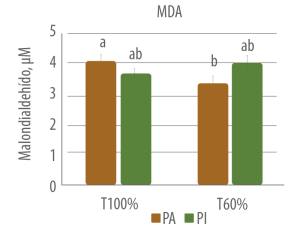
Graph 1. Interaction between feeding level and breed with blood gene expression levels of MDA. Means with different letters, a,b, differ significantly (P < 0.05).
No effects of feeding level, breed, or their interaction were observed on ABTS levels, an indicator of antioxidant capacity (P > 0.05).
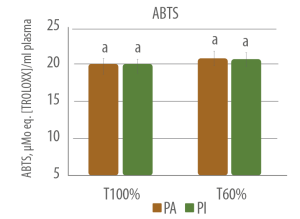
Graph 2. Interaction between feeding level and breed with blood gene expression levels of ABTS. Means with different letters, a,b, differ significantly (P < 0.05).
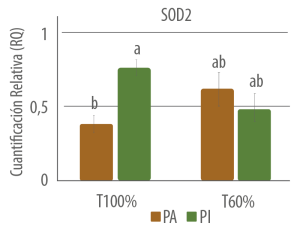
Graph 3. Interaction between feeding level and breed with blood gene expression levels of SOD2. Means with different letters, a,b, differ significantly (P < 0.05).
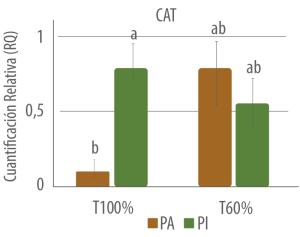
Graph 4. Interaction between feeding level and breed with blood gene expression levels of CAT. Means with different letters, a,b, differ significantly (P < 0.05).
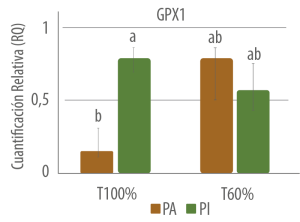
Graph 5. Interaction between feeding level and breed with blood gene expression levels of GPX1. Means with different letters, A,B, differ significantly (P < 0.05).
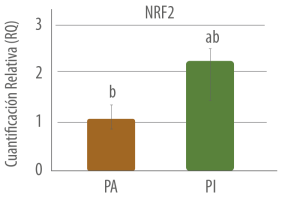
Graph 6. Relationship between breed and blood gene expression levels of NRF2. Means with different letters, a,b, differ significantly (P < 0.05).
The expression of antioxidant enzymes SOD2, CAT, and GPX1 was affected by the interaction between feeding level and breed:
|
DISCUSSION
The previous results show that Pirenaica calves exhibited a higher basal or initial antioxidant capacity, provided their mothers had not suffered any nutritional restriction during the last third of gestation, with higher levels of expression of genes related to this function (NRF2, SOD1, CAT, and GPX1) compared to Parda calves under the same conditions.
However, these differences were not reflected in ABTS levels, where no significant variations were observed between groups. It is noteworthy that PA-T60 % calves showed a trend towards higher enzymatic antioxidant capacity (SOD2, CAT, and GPX1) compared to those of the same breed from mothers without nutritional restriction and also coped better with this challenge than PI-T60 %.
This could also be related to the fact that PA-T60 % calves showed lower levels of MDA compared to PA-T100 % and Pirenaica calves, which had moderate levels of pro-oxidative activity.
 This suggests that the Parda de montaña breed might have better mechanisms or greater metabolic flexibility to face oxidative stress derived from maternal undernutrition.
The adaptability capacity may also be reflected in the greater efficiency in nutrient use during gestation by the Parda de montaña breed, improving fetal development, visible in the higher birth weight of their calves.
On the other hand, since these animals are fed exclusively with maternal milk, the higher levels of MDA observed in Parda de montaña calves whose mothers received the full amount of unifeed could be partly attributed to the higher milk yield characteristic of this breed.
This higher production by the mother implies a higher energy demand, which, in turn, exposes the animals to greater metabolic stress, reducing their antioxidant capacity and increasing pro-oxidative activity.
This could lead to a possible transfer of these effects to the offspring, as higher milk yield may entail a higher daily intake by the calves of pro-oxidant unsaturated fatty acids.
Finally, the Pirenaica breed would stand out for having a better oxidative status under favorable conditions.
However, the results could indicate a lower metabolic flexibility or a poorer efficiency in nutrient use when faced with a nutritional challenge, as no trend towards higher activity of antioxidant activity marker genes was observed in the more disadvantaged Pirenaica calves (T60%).
CONCLUSIONS
 During the first five weeks of life, Pirenaica calves showed a better oxidative status under optimal conditions, but Parda de Montaña calves presented a better response to the maternal nutritional challenge suffered during the last third of gestation, with an apparently greater antioxidant capacity and lower level of oxidative stress.
You may be interested in: Relationship between respiratory pathogens and antimicrobial resistance in weaned calves
Continue reading this content
Register for free or log in to access all rumiNews content.