
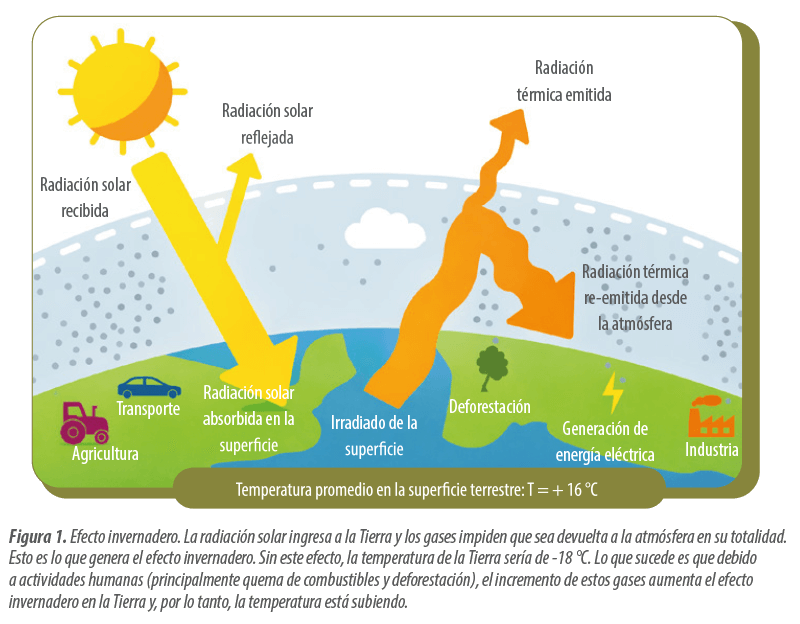
Greenhouse gases (GHG) are natural components of the atmosphere that retain some of the heat emitted by the Earth, keeping the climate stable, which is essential for life on the planet. However, human activities have significantly increased their concentrations, intensifying this effect and causing global warming (Figure 1).
The main GHGs include carbon dioxide (CO₂), methane (CH₄), nitrous oxide (N₂O), and fluorinated gases. Each has a different origin and impact.
 CO2 mainly comes from the burning of fossil fuels.
CH₄ has as its main sources livestock, rice cultivation, wetlands, and organic waste.
N₂O is associated with the use of fertilizers and manure management.
Fluorinated gases are emitted from industrial and refrigeration processes.
Among these gases, CH₄ stands out for its high warming potential, but its shorter duration in the atmosphere. This is why, over a 20-year period, CH4 has an impact 80 times greater, while over 100 years it is 25-30 times more potent than CO2. Additionally, it concerns us due to its direct relationship with enteric fermentation in ruminants.
 Globally, livestock activity emits approximately 7.1 gigatons of carbon dioxide equivalent annually, contributing 14.5% to the total anthropogenic GHG emissions (Ghassemi Nejad et al., 2024).
|
 It is evident, then, that mitigation livestock is not the main responsible for environmental pollution. However, as actors in animal production, it is a topic that must be responsibly addressed.
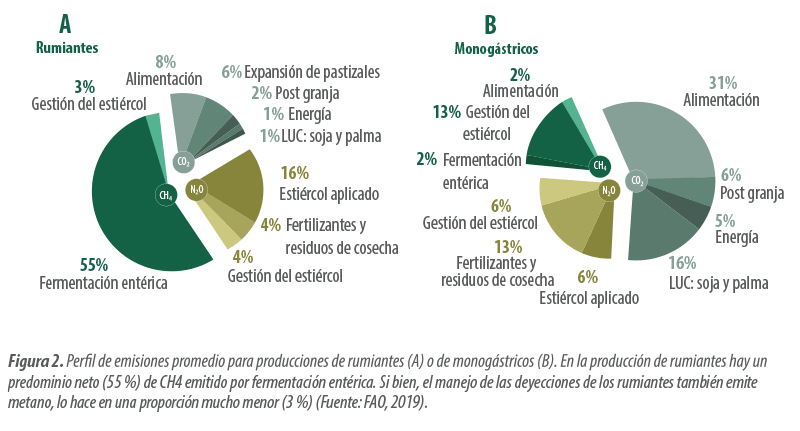
Ruminant production systems present a higher GHG emission intensity per unit of protein generated compared to monogastric species systems. Ruminants are also distinguished by a unique emissions profile, overwhelmingly dominated by CH₄, unlike pig or poultry production, where other sources predominate (Figure 2).
This peculiarity has positioned ruminants as a critical focus for mitigation strategies. Additionally, there is a great heterogeneity in emissions among different ruminant production systems, meaning those with higher emission intensities represent a great opportunity to apply mitigation measures.
|
 In a context of growing climate crisis, the future sustainability of beef and dairy production will critically depend on our ability to effectively implement practices that reduce the sector’s environmental footprint.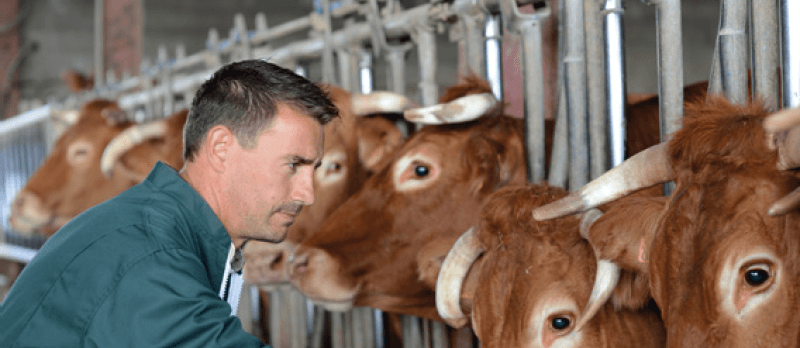
Enteric Methanogenesis: Bad or Good?
Ruminants possess a unique biological ability to convert low-value and non-human-edible foods (such as grasses or crop residues) into high-quality protein (meat, milk) through microbial fermentation, a digestive capacity absent in monogastric animals.
 However, this same process carries an environmental cost: when microorganisms break down fibrous plant material, one of the by-products of this digestion is CH₄, a potent greenhouse gas.
We will explain below:
 Why CH₄ production is inevitable in ruminants.
How this production creates a fundamental tension between global food security and climate goals.
1. The breakdown of lignocellulose to obtain energy from fibrous materials. 2. The continuous supply of high-quality microbial protein through the passage of the same microorganisms to the lower gastrointestinal tract. |

When the ruminant ingests food, it enters the rumen and is fermented by the microorganisms.
Carbohydrates are broken down into volatile fatty acids (VFA), mainly acetic, propionic, and butyric, which are mostly absorbed through the ruminal wall and serve as the main energy source for the ruminant. These carbohydrates can be:
The production of VFA is the constant result of the fermentation of any carbohydrate, although the type of substrate determines the specific proportions of each and the metabolic pathways used to generate them. |
 Energy production
 Microbial protein production
The degradation of proteins generates ammonia which, for the most part, is reused by bacteria to form microbial protein.
 The microbial mass produced in the rumen (which is a high-quality protein) passes to the posterior digestive tract, where it is digested, providing most of the amino acids for the ruminant.
This is how the rumen fulfills the two functions mentioned: it acts as a continuous fermenter, capable of supplying energy and generating high biological value protein for the ruminant.
So far, everything is positive, the ruminant is capable of generating products of the highest quality for humans from low-quality materials. But…
|
 During fermentation, H₂ and CO₂ are released as by-products and, since excess H₂ in the rumen inhibits microbial fermentation, it must be eliminated. For this, the ruminal ecosystem has specific anaerobic microorganisms, known as methanogenic archaea, which represent about 3% of the microbiota, and which use H₂ to reduce the resulting CO₂ and form CH₄ according to the following general reaction:
|
 Interestingly, the main methanogenic microorganism in the rumen is Methanobrevibacter spp., which is present in digestive systems as diverse as those of ruminants, humans, or termites. In humans, the deficiency of some species of this genus has been linked to gastrointestinal malfunction and the onset of colorectal cancer (Mohammadzadeh et al., 2022).
Since neither the ruminant nor the microbial population can metabolize CH₄, it is eliminated through eructation, with two drawbacks:
1. It represents a loss of potentially usable energy for the animal.
2. It is released into the atmosphere with the pollution this implies.
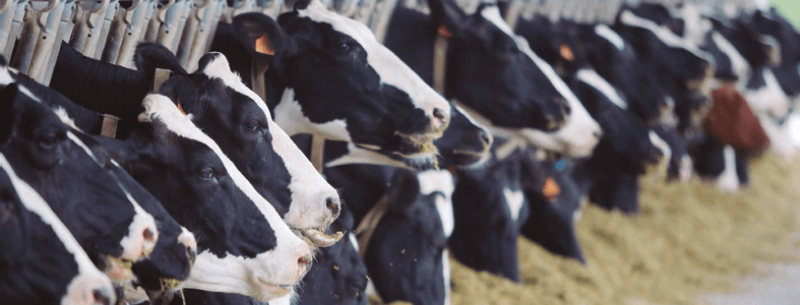
Relationship Between Dietary Fiber and CH4 Production
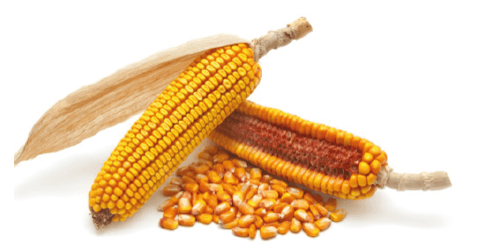 The more fibrous the diet, the greater the proportion of energy lost as CH₄, which is related to variations in the microbiota and the metabolic pathways that microorganisms use for fermentation.
High-fiber diets (especially rich in lignocellulose) promote fermentation dominated by acetate, a process that generates H₂ as a by-product and this is used by archaea to produce CH₄.
In contrast, low-fiber, high-concentrate diets favor the synthesis of propionate, a reaction that incorporates H2 instead of generating it, reducing the availability of H2 for methanogenesis.
The microbial communities present in the rumen dynamically adapt to these dietary changes. When the animal is fed a lot of fiber, fibrolytic bacteria (such as Fibrobacter succinogenes) and other acetate producers begin to predominate.
 In contrast, as more starch is supplied in the diet, this favors the proliferation of amylolytic bacteria (such as Streptococcus bovis) and pathways that generate propionate (Morgavi et al., 2010).
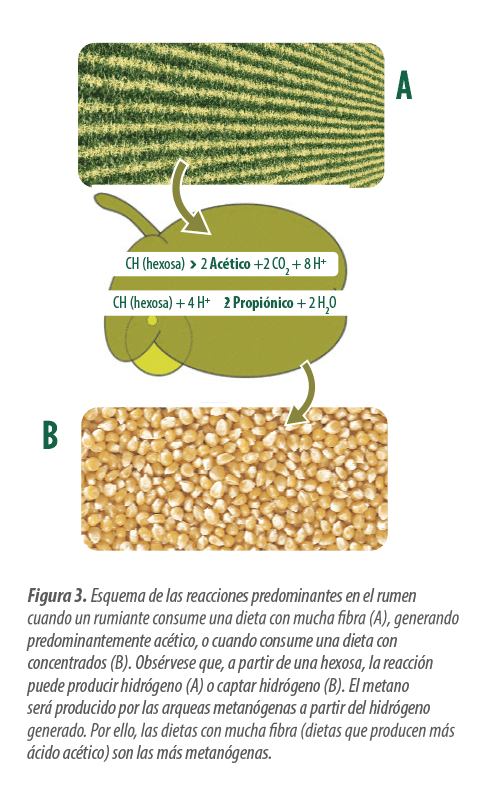
On the other hand, methanogen populations also adapt to the substrates present, so they decrease with the reduction of fiber in the diet. As we will see later, this is why increasing the amount of starch in the diet is a possible way to reduce methane production, although this change, besides being costly and competing with human food, can cause acidosis, altering ruminal fermentation.

Methane Monitoring Technologies
There are various methods to monitor and quantify CH₄ emissions in ruminants, each with different applications, advantages, and limitations. The choice of the most appropriate measurement method will vary depending on whether the data will be used for farm management decisions, feed evaluation, testing the efficacy of additives, or for genetic selection. The intended application dictates the most suitable methodology.
The enteric CH4 is mainly released by eructation from the rumen. It is also generated in the hindgut, from where it can be emitted through flatulence. A portion of the gas is absorbed from the digestive tract into the bloodstream and finally exhaled by the lungs. However, the vast majority (97-98%) of the total produced is emitted through the mouth and nostrils (Muñoz et al., 2012).
|
 This is why most methods measure methane at the muzzle level, and that is sufficient to have an accurate estimate of the amount emitted.
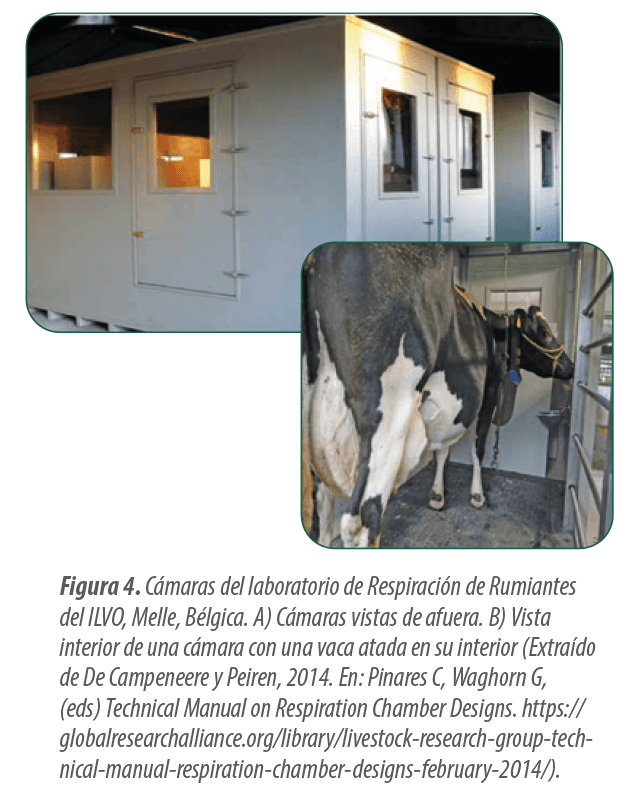
 Respiration chamber
The most accurate measurement method is the so-called “respiration chamber” (Figure 4), where animals are placed in sealed enclosures to measure the gases they emit. Although it is the “Gold Standard” in research, this system has limitations:
 The environment is artificial.
Restricts movement.
Does not fully reflect how animals live in natural conditions such as grazing.
Therefore, although it offers very accurate data, it does not always faithfully represent what happens in real practice.
SF6 tracer
The SF₆ tracer technique (Figure 5) involves placing a capsule in the animal’s rumen that releases a reference gas. A device carried by the animal itself collects air from its muzzle for several days to measure both the tracer and CH₄. By comparing both, the amount of methane produced can be calculated.
 The SF₆ is a practical, portable, and low-cost method, useful in animals both in grazing and in pens.
|
 However, it requires a lot of work to prepare and maintain the equipment, the animals need adaptation and can detach during measurements. Additionally, it is not useful for measuring daily or hourly changes in emission.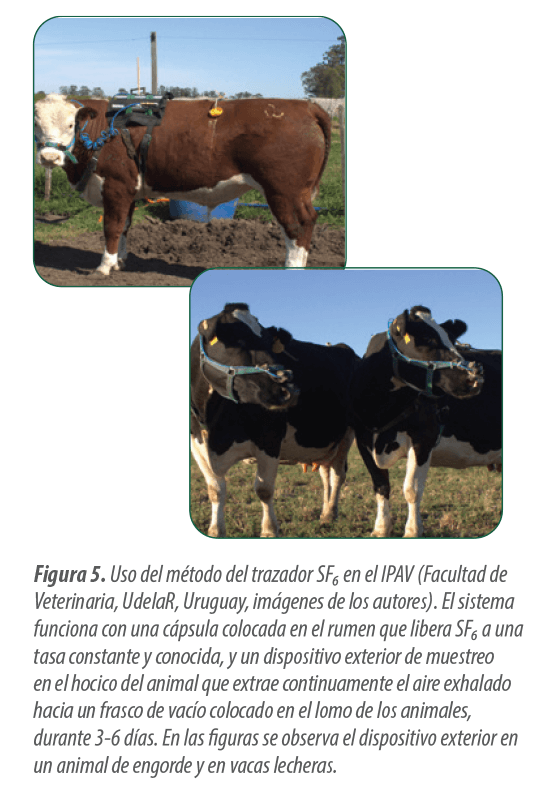
GreenFeed system
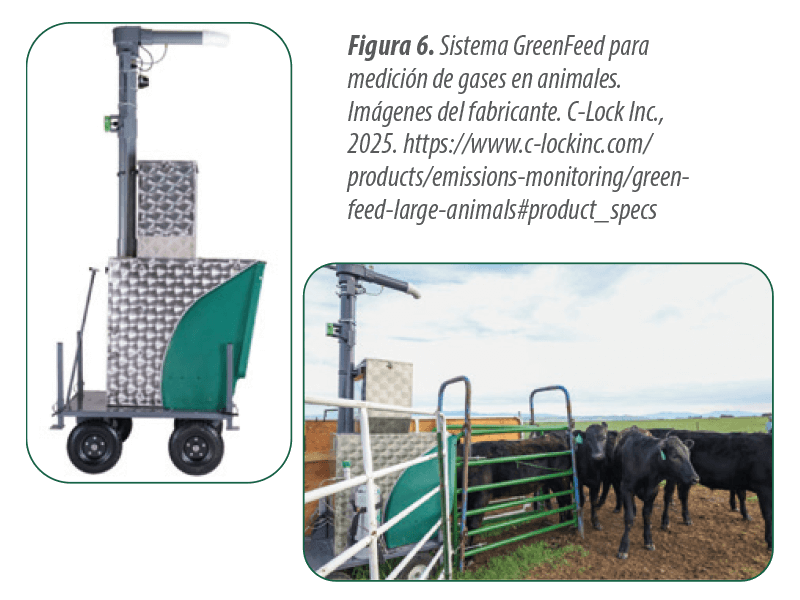
The GreenFeed system (Figure 6), which measures the CH₄ produced by animals while feeding, was developed by Zimmerman (1993).
 It works automatically and allows animals to move freely, although it only measures those trained to approach the equipment. To attract them, a small amount of concentrate feed is given, which limits its use in diets that use only pasture for feeding.
|
 With samples taken over several weeks, it offers reliable and real-time data on emissions. Its main disadvantage is that it depends on a specific manufacturer (C-Lock Inc., Rapid City, South Dakota, USA) and not all the data it generates can always be freely accessed.
A review conducted by Della Rosa et al. (2021), of nearly 400 studies (1995–2018) showed that most used respiration chambers (55%), followed by the SF₆ tracer method (38%), and to a lesser extent, GreenFeed systems (7%). However, it is expected that in the future the use of GreenFeed will increase, as more and more researchers adopt it for its advantages in measuring methane under real production conditions over long periods.
Sniffers
There are also portable methods for measuring methane on farms. One of them is the so-called “Sniffers” system, which are devices placed in the animals’ feeders that record emissions when cows eat or drink.
The sniffers are practical and relatively inexpensive, but they can fail due to animal head movements or differences in feeder construction.
Laser detectors
Methods using handheld laser detectors have been developed, which are more economical and capable of real-time measurement. Although promising, they still need more research to reduce errors related to distance or measurement angle.
Artificial intelligence (AI) is being used as a new indirect way to estimate the CH₄ produced by cows. Through algorithms and machine learning models, the use of AI allows detecting complex patterns and improving the accuracy of estimates. |
 Artificial intelligence
Milk analysis
Another indirect method involves analyzing cow’s milk, using spectroscopy and the study of fatty acids, along with information from the rumen microbiome. This allows estimating emissions on a large scale and could also help genetically select animals that produce less methane.
 Undoubtedly, the advancement of these types of measurement and estimation techniques will allow on-farm monitoring of emissions, becoming tools usable for daily decision-making.
In conclusion
CH4 from ruminants represents both an environmental challenge and a strategic opportunity.
 Understanding the biological mechanisms and management factors that explain these emissions is key to charting a path towards more sustainable systems.
Science has already advanced in measurement and monitoring methods that allow us to dimension the problem more precisely, but the great challenge lies in how to apply this knowledge to reduce emissions without compromising food security or the productivity of the sector.
Continue reading this content
Register for free or log in to access all rumiNews content.