



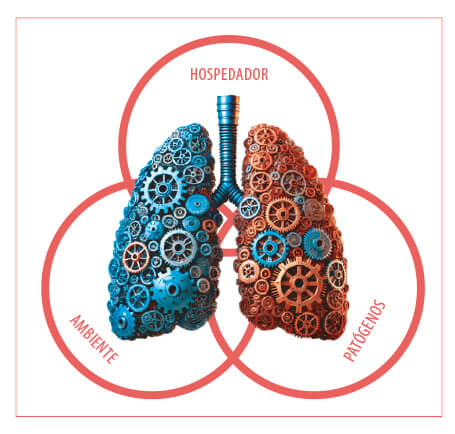
 The bovine respiratory disease complex (BRDC) is a multifactorial process that is very difficult to address, whose clinical presentation is largely influenced by various factors related to the host, the environment, or the infectious agents involved.
 Such is the variability of clinical-epidemiological situations that we can observe that it is not uncommon, even in the same feedlot, to find groups with high morbidity and mortality associated with respiratory disease alongside others that coexist without manifesting significant problems in this regard.
In these situations, the direct mortality caused is complemented by the presence of another variable percentage of animals that progress to chronic pneumonia cases that are very difficult to resolve and have poor therapeutic response, regardless of the measures taken.
|
 The conclusion is clear: high losses for companies and batches that, from the first month, will generate losses as a whole at the end of the fattening period, in addition to requiring greater use of antibiotics, which contributes to the emergence of resistance in chronic pneumonias.
At the infectious level, there is a wide range of pathogens that can participate to a greater or lesser extent in the etiology of the complex, generating mixed infections that respond very variably to treatments and other control measures implemented in the feedlots. Among them, it is worth highlighting:
VIRUSES |
BACTERIA |
 Respiratory syncytial virus.
 Pasteurella multocida.
 In this complex context, the results obtained in recent years have suggested the increase in the involvement of Mycoplasma bovis in the etiology of the syndrome, both nationally and internationally.
 This has motivated the conduct of various etiological studies whose main objective has been to establish its real epidemiological role and involvement in various productive areas, both in suckling calves and mainly in grazing calves (Becker et al., 2020; Dudek et al. 2020; García-Galán et al., 2020; García-Galán et al., 2021).

THE FIRST MONTH OF FATTENING: KEY IN THE PRESENTATION OF BOVINE RESPIRATORY COMPLEX
The complexity of the functioning of the beef cattle sector under current conditions means that, on many occasions, due to the type of supply and demand existing, feedlots have to incorporate animals from very diverse origins, both from the national market and the international market.
 In many of the individuals entering the feedlots, various aspects that are fundamentally important for the development of the BRC are completely unknown, for example:
 The correct colostrum intake of the animals.
The strategies of active immunization that can help protect individuals before entering the finishing stage.
This, combined with the stress caused by the transit days from the farm of origin to the final destination or the absence of quarantine periods, makes the formation of lots from multiple origins become a real lottery and, evidently, in many cases the animals do not respond adequately to the health interventions carried out in the first days of arrival at the feedlots.
|
 What happens during the first month of stay in the centers is fundamental to understanding what happens with the BRD and mainly, design better control measures.
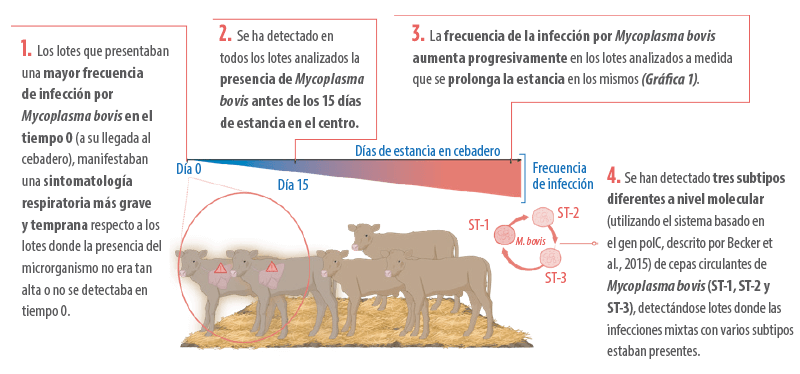
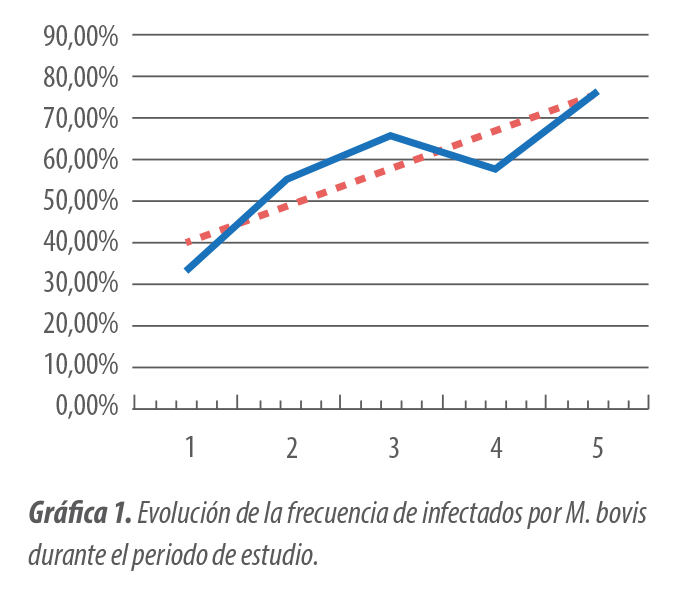
 In this regard, the analysis and monitoring work carried out in several groups of pasture calves located in feedlots in the Valencian Community and the Region of Murcia, have highlighted several aspects of interest regarding the involvement of Mycoplasma bovis, which we could summarize as follows:
|
 All this has allowed us to obtain practical conclusions regarding the control of the respiratory syndrome that seem to guide us towards the need to apply corrective measures long before the onset of symptoms, regardless of what happens in more advanced periods or when they become more evident.
 We are not only talking about what happens when the animals arrive at the feedlots!
The analyses carried out have shown that when calves arrive at the feedlots, a variable percentage of individuals are directly or indirectly identified as already having mixed bacterial and/or viral infections acquired in stages prior to their arrival.
 In fact, in the batches that have been monitored and were more affected, the respiratory symptoms can appear practically from their entry into the feedlots or, at the latest, in the first week, a few days after the start of fattening.
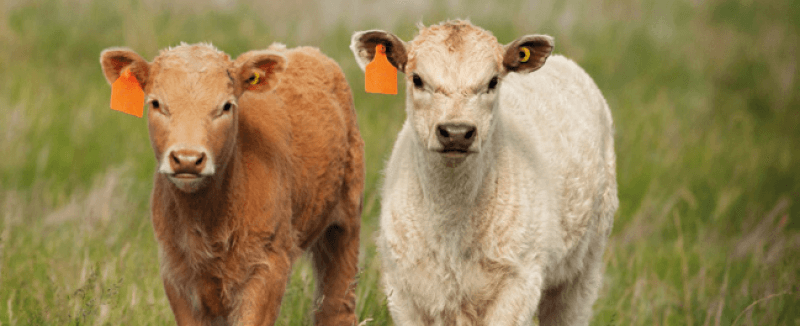
CALF CONDITIONING: FUNDAMENTAL TO LIMIT THE EFFECTS OF BRD
It is evident that a complex plurietiological and multifactorial syndrome like BRD cannot be completely eliminated.
But as strong as this statement is, so is the fact that preventive or control measures to limit its effect on the animals should begin before the animals reach the final stage of fattening.
 In the same vein, it is quite likely that if the calves were well immunized and prepared for this process, and also faced only the infection by Mycoplasma bovis, the health and economic consequences of the infection would be much lower.
But this is not what happens…
In the feedlots, the movement of individuals with different epidemiological characteristics is continuous.
 These animals arrive with a “history of previous encounters” with infectious agents that can be very different among them, in addition to the subsequent interaction with one or some of the microorganisms circulating in the feedlot.

Being as well prepared as possible for this challenge is essential…
The results obtained by our work team seem to indicate that the previous infection with some respiratory viruses such as the respiratory syncytial virus represents a predisposing factor for suffering from BRD in its more complex forms in the feedlot, in addition to predisposing the animal to infection by Mycoplasma bovis.
This synergistic effect between both microorganisms should not surprise us, since the presence of both -and others- and their interaction with the host’s immune system is common.
 However, much information is lacking regarding the pathogenicity mechanisms used by these microorganisms or the interaction established between them, including, as recently seen, the exchange of genetic material between different bacteria that can trigger unpredictable phenotypic effects.
If many calves arrive infected at the feedlots, it is also possible that the infection may be present in many of the origin groups, both of pasture calves and suckling calves.
 It should be analyzed what happens in the concentration centers or throughout the process of transporting the animals from one place to another, where transmission, referring also to very stressed animals, is not dismissible.
 There is no data in this regard, but what does seem clear is that everything we do to strengthen the immunity of the animals will make them less sensitive to the subsequent effects of BRD.
|
 A good colostrum intake and feeding of the animals must be ensured, to which we must undoubtedly add the active immunization against the most important viral agents, responsible for negatively predisposing calves to infection by Mycoplasma bovis and/or some of the other opportunistic pathogens that take advantage of the situation to increase the respiratory damage of the affected animals.
TREATMENT OF CALVES: INEFFECTIVE IN MANY CASES
Once respiratory symptoms appear in the first weeks of fattening, the solution is complex.
 Evidently, the use of antimicrobials is necessary, but unfortunately, sometimes, it scarcely limits the effects of the pathology.
We previously mentioned the existence of at least three subtypes of Mycoplasma bovis. Well, all of them show high resistance values against different groups of antimicrobials, among which we can include:
|
|
WHAT CAN WE DO?
It is evident that the presence and involvement of M. bovis in the BRD is significant and that, both nationally and internationally, it is considered one of the most important pathogenic agents, without underestimating its importance in dairy herds, which must also be thoroughly analyzed (Dudek et al. 2020). In our opinion, some of the actions that need to be focused on should center on the following aspects:
1. Reduction of infection pressure (cleaning, disinfection, minimum possible number of origins, quarantine).
Whenever possible, animals from a single farm should be incorporated, and if not, they should be incorporated from the smallest possible number of source farms in the lots to be fattened.
Intensify cleaning and disinfection measures, in addition to establishing mandatory quarantine spaces and times.
2. Effective immunization
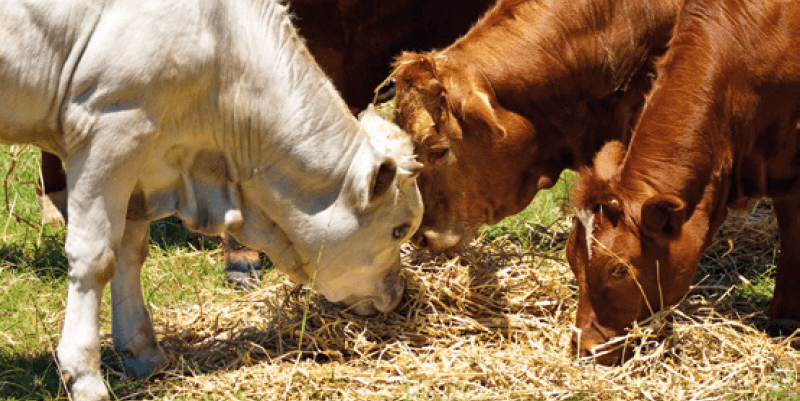
It is essential to address animal health mandatorily at the source to increase resistance upon the animals’ arrival at the feedlot (preconditioning, with a minimum health and nutritional program) (Image 1).
It is necessary to actively and correctly immunize mandatorily (with the necessary doses) the calves at least against respiratory viruses, mainly against the respiratory syncytial virus (RSV).
3. Health surveillance
It is important to record and analyze direct health data in each feedlot, taking into account different parameters (at a minimum, % morbidity, % chronic cases, % mortality, as there are other indicators), identifying and prioritizing pathogens:
 Most prevalent.
With poor therapeutic response.
With high risk of chronicity.
With high antimicrobial consumption.
It may be advisable, in problematic batches a priori, to perform a microbiological analysis of respiratory samples from a percentage of individuals on day 0, in order to have information on the presence of infectious agents and their bacterial sensitivity to antimicrobials.
4. Risk management
It is essential to work with the sector in the field of design and improvement of facilities, and the design and management of batches, specifically considering the application of the necessary quarantine periods or the progressive implementation of biosecurity measures already existing in other productive sectors. All of this aims to characterize the risk of each of them.
ACKNOWLEDGMENTS
The work being developed is part of the Project funded by the Autonomous Community of the Region of Murcia through the call for Grants for projects for the development of scientific and technical research by competitive groups, included in the Regional Program for the Promotion of Scientific and Technical Research (Action Plan 2022) of the Fundación Séneca-Agency of Science and Technology of the Region of Murcia (Project SENECA 22034/PI/22), with the direct collaboration of the following companies: Juan Jiménez García S.A.U.; BOS NOSTRUM S.L., ADS de bovino de Lorca and Cargill SLU CPN España.
You may be interested: Characterizing the epidemiological role of Mycoplasma bovis to improve the control of the bovine respiratory complex
BIBLIOGRAPHY
Becker CA, Thibault FM, Arcangioli MA, Tardy F. Loss of diversity within Mycoplasma bovis isolates collected in France from bovines with respiratory diseases over the last 35 years. Infect Genet Evol. 2015 Jul; 33:118-26
Becker CAM, Ambroset C, Huleux A, Vialatte A, Colin A, Tricot A, Arcangioli MA, Tardy F. Monitoring Mycoplasma bovis Diversity and Antimicrobial Susceptibility in Calf Feedlots Undergoing a Respiratory Disease Outbreak. Pathogens. 2020 Jul 21;9(7):593
Corrales JC, Sánchez A, Hernández X, Amores-Iniesta J, Esnal A, de la Fe C. A Set of Multiresistant Isolates of Mycoplasma bovis Subtype ST-1 with a Variable Susceptibility to Quinolones Are Also Circulating in Spain. Pathogens. 2024 Apr 16;13(4):329.
Dudek K, Nicholas RAJ, Szacawa E, Bednarek D. Mycoplasma bovis Infections-Occurrence, Diagnosis and Control. Pathogens. 2020 Aug 6;9(8):640.
García-Galán A, Nouvel Lx, Baranowski E, Gómez-Martín Á, Sánchez A, Citti C, De La Fe C. 2020. Mycoplasma bovis in Spanish Cattle Herds: Two Groups of Multiresistant Isolates Predominate, with One Remaining Susceptible to Fluoroquinolones. Pathogens, 9(7):545.
García-Galán A, Seva J, Gómez-Martín Á, Ortega J, Rodríguez F, García-Muñoz Á, De la Fe C. Importance and Antimicrobial Resistance of Mycoplasma bovis in Clinical Respiratory Disease in Feedlot Calves. Animals (Basel). 2021. 11(5):1470

Continue reading this content
Register for free or log in to access all rumiNews content.