



The contagious ecthyma (CE) is a disease caused by the Orf virus (ORFV) that primarily affects small ruminants (Gómez et al., 2024).
The high prevalence of CE worldwide and the severe economic losses it causes in affected farms make it one of the most important small ruminant diseases today (Lovatt et al., 2012; Windsor et al., 2017).
CONTAGIOUS ECTHYMA: CHALLENGES IN ITS PREVENTION AND CONTROL
EC is characterized by the presence of papules, vesicles, and pustules on the muzzle, lip, and base of the ears that can lead to proliferative crusty dermatitis, currently defined as pseudotumoral lesions (Pintus et al., 2024).
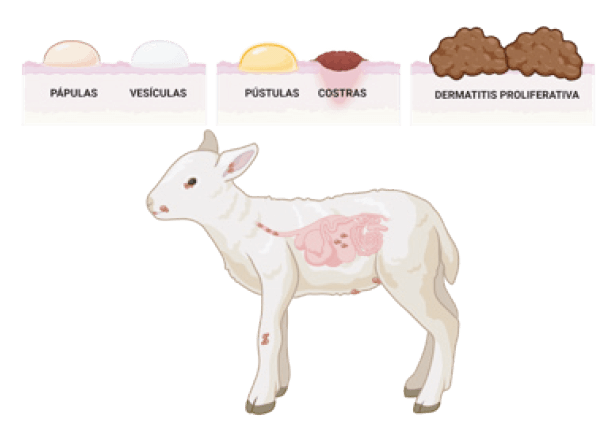
Less frequently, these dermal lesions can also be observed in other anatomical regions, such as the teats. Likewise, this disease causes erosions and ulcers in the oral and gastrointestinal mucosa (Lacasta et al., 2024).
 Lesions caused by ORFV promote the occurrence of secondary bacterial infections that increase the severity of the clinical condition (Haig & Fleming, 1999).
EC is not a notifiable disease and countries lack specific control and prevention programs.
 Currently, no commercial diagnostic tools are available and, therefore, epidemiological studies are limited to reporting new cases.
EC does not have a specific treatment, although some antiseptic-analgesic formulas have managed to reduce the severity of lesions in natural infections (Gómez et al., 2024).
 Most affected farms tend to treat animals with different antibiotics due to concomitant secondary infections, potentially generating resistances due to prolonged treatments (Kumar et al., 2015).
|
In some countries like Australia or France, vaccination is used as the main control measure in endemic areas. However, in Spain there is no registered vaccine against ORFV. Currently, there is no universal effective and safe vaccine against EC as ORFV is able to evade the immune system through different mechanisms (Bukar et al., 2021; Fleming et al., 2015):
|


 The accessory genes, located at the ends of the ORFV genome, encode immunomodulatory proteins such as OVIFNR (interferon resistance protein), vVEGF (viral vascular endothelial growth factor), GM-CSF (granulocyte-macrophage colony-stimulating factor), and vCBP (viral chemokine binding protein) that inhibit antigen presentation and the recruitment of leukocytes to the affected epidermis and mucosae.
The infection localized in epithelial cells of the skin and oral-gastrointestinal mucosa are difficult to access for antibodies and immune cells such as T lymphocytes, which favors the persistence of the virus (Bukar et al., 2021; Fleming et al., 2015).
The different strains of ORFV can present mutations leading to changes in virulence and pathogenicity that complicate immunization strategies (Fleming et al., 2015; Hosamani et al., 2009).
The widespread distribution of this disease, its impact on the viability of farms, and its zoonotic potential make the development of safe and effective vaccines of special interest.
So far, different types of vaccines against ORFV have been generated:
 Crust-based vaccines
Live attenuated vaccines
Subunit vaccines
DNA vaccines
Viral vector-based vaccines
Currently, live attenuated vaccines in cell culture are the only ones registered in some countries.
|

IMMUNOLOGICAL PARAMETERS RESPONSIBLE FOR PROTECTION AGAINST ORFV
An essential step in the development of vaccination strategies is knowing what type of immune response is intended to be prioritized to confer the highest possible degree of protection.
Natural infection induces a humoral response mediated by antibodies that are not capable of inducing protection against infection, nor elimination of the virus (Buddle & Pulford, 1984; Mercer et al., 1997).
In general, ORFV infection does not induce high titers of neutralizing antibodies. However, some studies show that animals with a high antibody titer are able to recover better after reinfection (McKeever et al., 1988; Yirrell et al., 1991).
Therefore, the role of antibodies in the control of this disease is not fully known.

 T lymphocytes, both CD4+ and CD8+, play a very important role in the elimination of the virus (Anderson et al., 2001; Haig, 2006; Haig & McInnes, 2002), with the Th1/cellular response being the most important for the control of this disease.
 Additionally, multiple studies have suggested that the stimulation of the innate immune response in the first hours of ORFV infection is key in its immunological control (Friebe et al., 2004; Haig, 2006).
VACCINES AGAINST ORFV: PAST, PRESENT AND FUTURE
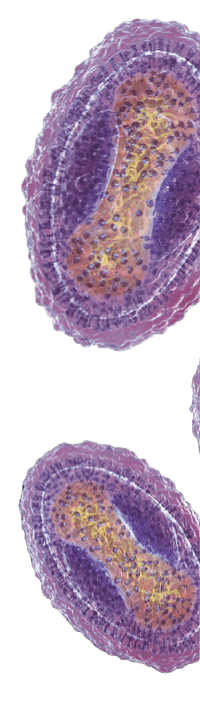 Crust-based vaccines
Crust-based vaccines require the isolation and purification of ORFV strains obtained from proliferative crusty lesions of affected lambs or goat kids.
These vaccines were used in 1930 with some success (Bala et al., 2018; Musser et al., 2008, 2012), but fell into disuse due to their serious safety issues such as the high incidence of lesions in immunized animals, even transmissible to non-vaccinated animals.
 Moreover, this type of vaccine did not induce cross-protection against other viral strains and posed a risk of viral recombination and generation of new strains.
Live attenuated vaccines in cell cultures
Later, live attenuated vaccines were developed in cell cultures based on pathogenic viruses attenuated after numerous infection passages in different cell lines.
After a certain number of passages, the viruses begin to undergo mutations, some of which may affect the virulence genes, preventing them from inducing pathology in vivo after inoculation.
Although they are safer than the previous ones, they induce a partial, short protection (3-6 months) and not transmissible to the offspring through colostrum (Bath et al., 2005; Bhanuprakash et al., 2012; Friebe et al., 2004; Musser et al., 2008; Onyango et al., 2014; Tan et al., 2009).
 These vaccines are currently registered in some countries such as France and Australia and are only recommended in enzootic areas.
Live attenuated vaccines through targeted deletion
Currently, live attenuated vaccines are being investigated through targeted deletion, using different genetic editing techniques, of some of the pathogenic genes of ORFV (Shen et al., 2023; Zhu et al., 2022).
So far, two recombinant ORFVs with deletions in two (vCBP and GM-CSF) and three (vCBP, GM-CSF, and ORFV 121) genes have been generated, achieving complete protection in goat kids against ORFV infection.
However, this type of vaccine has not been tested in sheep and its protection against other viral strains requires further studies.

Additionally, this type of attenuated virus can revert its virulence, recombine with field viruses generating new strains, or become contaminated during laboratory production (Asín et al., 2021; Buddle & Pulford, 1984).
Subunit and DNA vaccines
A safer option consists of non-replicative vaccines of antigenic subunits or DNA vaccines, based on immunogenic proteins or highly conserved genes such as ORFV B2L (ORFV 011 gene) and ORFV F1L (ORFV 059 gene) (Wang et al., 2023; Wassie et al., 2019; Zhao et al., 2011).
 Both subunit vaccines and heterologous regimens with subunit and DNA vaccines based on these proteins have induced a robust specific humoral and cellular immune response against ORFV in mouse models.
Recently, a subunit vaccine against ORFV containing multiple epitopes derived from ORFV B2L, F1L, and 080 proteins (Pang et al., 2024).
This vaccine has shown that it is capable of inducing a robust specific immune response in different cell cultures. Therefore, the next step is to determine if this type of vaccine induces protection against ORFV in small ruminants.
Vaccines based on viral vectors
Vaccines based on viral vectors are currently being widely studied against different pathogenic agents. So far, Vaccinia and Adenovirus viruses have been used as viral vectors for the development of vaccines against ORFV.
The generation of a recombinant Vaccinia virus expressing multiple fragments of ORFV DNA has shown marked protection in lambs against ORFV infection (Mercer et al., 1997). However, the immunogenic proteins responsible for this are unknown.
The recombinant Adenovirus expressing ORFV proteins B2L and F1L (Wang et al., 2023) has lower immunogenicity than heterologous regimens based on DNA and subunit vaccines.
The vectors based on the murine Sendai virus (SeV) are known as inducers of pro-inflammatory, antiviral responses and have a high capacity for transgenic expression (Griesenbach et al., 2010).
Recently, the authors of this work generated two recombinant SeVs expressing the B2L (rSeV-GFP-B2L) and F1L (rSeV-GFP-059) proteins.
The rSeV-GFP-B2L vector exacerbates ORFV infection.
Sheep immunized with the rSeV-GFP-059 vector showed complete protection against ORFV infection (Gómez et al., 2023).
|
 Viral vector-based vaccines can be considered a promising option for the control of ORFV.
CONCLUSIONS
In conclusion, vaccination is the best, if not the only effective measure to control EC.
 The available live attenuated vaccines are not effective and may present safety issues.
The immune-evasive strategies of ORFV complicate vaccine design, requiring a deep understanding of the genome and the immunogenic properties of its proteins.
New strategies based on molecular biology offer the possibility of generating safer recombinant vaccines with a targeted immunological spectrum.
 Subunit vaccines, heterologous regimens of subunit and DNA vaccines, and those based on viral vectors constitute a safer and more effective option for the future control of this disease.
You may be interested in: Contagious ecthyma in small ruminants: lesion pattern and keys for its diagnosis

BIBLIOGRAPHY
1. Anderson, I. E., Reid, H. W., Nettleton, P. F., McInnes, C. J., Haig, D. M. 2001. Detection of cellular cytokine mRNA expression during orf virus infection in sheep: Differential interferon-γ mRNA expression by cells in primary versus reinfection skin lesions. Veterinary Immunology and Immunopathology, 83(3–4), 161–176. https://doi.org/10.1016/S0165-2427(01)00388-9
2. Asín, J., Hilbe, M., de Miguel, R., Rodríguez-Largo, A., Lanau, A., Akerman, A., Stalder, H., Schweizer, M., Luján, L. 2021. An outbreak of abortions, stillbirths and malformations in a Spanish sheep flock associated with a bovine viral diarrhoea virus 2-contaminated orf vaccine. Transboundary and Emerging Diseases, 68(2), 233–239. https://doi.org/10.1111/TBED.13619
3. Bala, J. A., Balakrishnan, K. N., Abdullah, A. A., Mohamed, R., Haron, A. W., Jesse, F. F. A., Noordin, M. M., Mohd-Azmi, M. L. 2018. The re-emerging of orf virus infection: A call for surveillance, vaccination and effective control measures. Microbial Pathogenesis, 120, 55–63. https://doi.org/10.1016/J.MICPATH.2018.04.057
4. Bath, G. F., Van Wyk, J. A., Pettey, K. P. 2005. Control measures for some important and unusual goat diseases in southern Africa. Small Ruminant Research, 60(1–2), 127–140. https://doi.org/10.1016/J.SMALLRUMRES.2005.06.007
5. Bhanuprakash, V., Hosamani, M., Venkatesan, G., Balamurugan, V., Yogisharadhya, R., Singh, R. K. 2012. Animal poxvirus vaccines: a comprehensive review. Expert Review of Vaccines, 11(11), 1355–1374. https://doi.org/10.1586/ERV.12.116
6. Buddle, B. M., Pulford, H. D. 1984. Effect of passively-acquired antibodies and vaccination on the immune response to contagious ecthyma virus. Veterinary Microbiology, 9(6), 515–552. https://doi.org/10.1016/0378-1135(84)90013-0
7. Bukar, A. M., Jesse, F. F. A., Abdullah, C. A. C., Noordin, M. M., Lawan, Z., Mangga, H. K., Balakrishnan, K. N., Azmi, M. L. M. 2021. Immunomodulatory Strategies for Parapoxvirus: Current Status and Future Approaches for the Development of Vaccines against Orf Virus Infection. Vaccines, 9(11), 1341. https://doi.org/10.3390/VACCINES9111341
8. Gómez, Á., Rodríguez-Largo, A., Reina, R., Luján, L. 2024. Orf Virus Infection in Small Ruminants. Encyclopedia of Livestock Medicine for Large Animal and Poultry Production, 1–6. https://doi.org/10.1007/978-3-031-52133-1_219-1
9. Fleming, S. B., Wise, L. M., Mercer, A. A. 2015. Molecular Genetic Analysis of Orf Virus: A Poxvirus That Has Adapted to Skin. Viruses, 7(3), 1505–1539. https://doi.org/10.3390/V7031505
10. Friebe, A., Siegling, A., Friederichs, S., Volk, H.-D., Weber, O. 2004. Immunomodulatory Effects of Inactivated Parapoxvirus Ovis (Orf Virus) on Human Peripheral Immune Cells: Induction of Cytokine Secretion in Monocytes and Th1-Like Cells. Journal of Virology, 78(17), 9400–9411. https://doi.org/10.1128/JVI.78.17.9400-9411.2004/ASSET/9A7759D4-6274-4BA8-975C-06674745CD09/ASSETS/GRAPHIC/ZJV0170450440015.JPEG
11. Gómez, Á., Lacasta, D., Teresa Tejedor, M., Ruiz de Arcaute, M., Ramos, J. J., Ruiz, H., Ortín, A., Villanueva-Saz, S., Reina, R., Quílez, P., Navarro, T., Verde, M., Borobia, M., Windsor, P. A. 2024. Use of a local anaesthetic and antiseptic wound formulation for the treatment of lambs naturally infected with Orf virus. Veterinary Microbiology, 292, 110037. https://doi.org/10.1016/J.VETMIC.2024.110037
12. Gómez, Á., Rodríguez Largo, A., Echeverría, I., Puzol, L., Moncayola, I., Arriazu, L., Calero, A., Pérez E., Calvo-Sánchez N., Glaria, I., Nazabal, M., Hualde, I., Luján, L., Reina, R. (2023). Evaluation of two recombinant viral-vectored vaccines against Orf virus in sheep. Journal of Comparative Pathology, 210, 85-86. https://doi.org/10.1016/j.jcpa.2024.03.119
13. Griesenbach, U., McLachlan, G., Owaki, T., Somerton, L., Shu, T., Baker, A., Tennant, P., Gordon, C., Vrettou, C., Baker, E., Collie, D. D. S., Hasegawa, M., Alton, E. W. F. W. 2010. Validation of recombinant Sendai virus in a non-natural host model. Gene Therapy, 18(2), 182–188. https://doi.org/10.1038/gt.2010.131
14. Haig, D. M. 2006. Orf virus infection and host immunity. Current Opinion in Infectious Diseases, 19(2), 127–131. https://doi.org/10.1097/01.QCO.0000216622.75326.EF
15. Haig, D. M., Fleming, S. 1999. Immunomodulation by virulence proteins of the parapoxvirus orf virus. Veterinary Immunology and Immunopathology, 72(1–2), 81–86. https://doi.org/10.1016/S0165-2427(99)00119-1
16. Haig, D. M., McInnes, C. J. 2002. Immunity and counter-immunity during infection with the parapoxvirus orf virus. Virus Research, 88(1–2), 3–16. https://doi.org/10.1016/S0168 1702(02)00117-X
17. Hosamani, M., Scagliarini, A., Bhanuprakash, V., McInnes, C. J., Singh, R. K. 2009. Orf: an update on current research and future perspectives. Expert Review of Anti-Infective Therapy, 7(7), 879–893. https://doi.org/10.1586/ERI.09.64
18. Kumar, R., Trivedi, R. N., Bhatt, P., Khan, S. U. H., Khurana, S. K., Tiwari, R., Karthik, K., Malik, Y. S., Dhama, K., Chandra, R. 2015. Contagious Pustular Dermatitis (Orf Disease) Epidemiology, Diagnosis, Control and Public Health Concerns. Advances in Animal and Veterinary Sciences, 3(12), 649–676. https://doi.org/10.14737/JOURNAL.AAVS/2015/3.12.649.676
19. Lacasta, D., Cuadra, M., Gómez, Á., Ortín, A., Ruiz de Arcaute, M., Ramos, J. J., Villanueva Saz, S., Tejedor, M. T., Ruiz, H., Verde, M., Reina, R., Navarro, T., Quilez, P., Rodríguez-Largo, A., Windsor, P. A. 2024. Comparative study of three different routes of experimental inoculation of the orf virus. Small Ruminant Research, 233, 107248. https://doi.org/10.1016/J.SMALLRUMRES.2024.107248
20. Lovatt, F. M., Barker, W. J. W., Brown, D., Spooner, R. K. 2012. Case-control study of orf in preweaned lambs and an assessment of the financial impact of the disease. Veterinary Record, 170(26), 673–673. https://doi.org/10.1136/VR.100646
21. McKeever, D. J., McEwan Jenkinson, D., Hutchison, G., Reid, H. W. 1988. Studies of the pathogenesis of orf virus infection in sheep. Journal of Comparative Pathology, 99(3), 317–328. https://doi.org/10.1016/0021-9975(88)90052-7
22. Mercer, A. A., Yirrell, D. L., Whelan, E. M., Nettleton, P. F., Pow, I., Gilray, J. A., Reid, H. W., Robinson, A. J. 1997. A Novel Strategy for Determining Protective Antigens of the Parapoxvirus, Orf Virus. Virology, 229(1), 193–200. https://doi.org/10.1006/ VIRO.1996.8433
23. Musser, J. M. B., Taylor, C. A., Guo, J., Tizard, I. R., Walker, J. W. 2008. Development of a contagious ecthyma vaccine for goats. American Journal of Veterinary Research, 69(10), 1366–1370. https://doi.org/10.2460/AJVR.69.10.1366
24. Musser, J. M. B., Waldron, D. F., Taylor, C. A. 2012. Evaluation of homologous and heterologous protection induced by a virulent field strain of orf virus and an orf vaccine in goats. American Journal of Veterinary Research, 73(1), 86–90. https://doi.org/10.2460/AJVR.73.1.86
25. Onyango, J., Mata, F., McCormick, W., Chapman, S. 2014. Prevalence, risk factors and vaccination efficacy of contagious ovine ecthyma (orf) in England. Veterinary Record, 175(13), 326–326. https://doi.org/10.1136/VR.102353
26. Pang, F., Long, Q., Liang, S. 2024. Designing a multi-epitope subunit vaccine against Orf virus using molecular docking and molecular dynamics. Virulence, 15(1). https://doi.org/10.1080/21505594.2024.2398171
27. Pintus, D., Cancedda, M. G., Puggioni, G., Scivoli, R., Rocchigiani, A. M., Maestrale, C., Coradduzza, E., Bechere, R., Silva-Flannery, L., Bullock, H. A., Macciocu, S., Montesu, M. A., Marras, V., Dore, S., Ritter, J. M., Ligios, C. 2024. ORF virus causes tumor-promoting inflammation in sheep and goats. Veterinary Pathology. https://doi.org/10.1177/03009858241241794/ASSET/IMAGES/LARGE/10.1177_03009858241241794-FIG5.JPEG
28. Shen, Z., Liu, B., Zhu, Z., Du, J., Zhou, Z., Pan, C., Chen, Y., Yin, C., Luo, Y., Li, H., Chen, X. 2023. Construction of a Triple-Gene Deletion Mutant of Orf Virus and Evaluation of Its Safety, Immunogenicity and Protective Efficacy. Vaccines, 11(5), 909. https://doi.org/10.3390/VACCINES11050909/S1
29. Tan, J. L., Ueda, N., Mercer, A. A., Fleming, S. B. 2009. Investigation of orf virus structure and morphogenesis using recombinants expressing FLAG-tagged envelope structural proteins: Evidence for wrapped virus particles and egress from infected cells. Journal of General Virology, 90(3), 614–625. https://doi.org/10.1099/VIR.0.005488-0/CITE/REFWORKS
30. Wang, Y., Sun, S., Zhao, K., Du, L., Wang, X., He, W., Gao, F., Song, D., Guan, J. 2023. Orf virus DNA prime-protein boost strategy is superior to adenovirus-based vaccination in mice and sheep. Frontiers in Immunology, 14, 1077938. https://doi.org/10.3389/FIMMU.2023.1077938/BIBTEX
31. Wassie, T., Fanmei, Z., Jiang, X., Liu, G., Girmay, S., Min, Z., Chenhui, L., Bo, D. D., Ahmed, S. (2019). Recombinant B2L and Kisspeptin-54 DNA Vaccine Induces Immunity Against Orf Virus and Inhibits Spermatogenesis In Rats. Scientific Reports 2019 9:1, 9(1), 1–11. https://doi.org/10.1038/s41598-019-52744-y
32. Windsor, P. A., Nampanya, S., Tagger, A., Keonam, K., Gerasimova, M., Putthana, V., Bush, R. D., Khounsy, S. 2017. Is orf infection a risk to expanding goat production in developing countries? A study from Lao PDR. Small Ruminant Research, 154, 123–128. https://doi.org/10.1016/J.SMALLRUMRES.2017.08.003
33. Yirrell, D. L., Reid, H. W., Norval, M., Miller, H. R. P. 1991. Qualitative and Quantitative Changes in Ovine Afferent Lymph Draining the Site of Epidermal Orf Virus Infection. Veterinary Dermatology, 2(3–4), 133–141. https://doi.org/10.1111/J.1365-3164.1991. TB00124.X
34. Zhao, K., He, W., Gao, W., Lu, H., Han, T., Li, J., Zhang, X., Zhang, B., Wang, G., Su, G., Zhao, Z., Song, D., Gao, F. 2011. Orf virus DNA vaccines expressing ORFV 011 and ORFV 059 chimeric protein enhances immunogenicity. Virology Journal, 8(1), 1–12. https://doi.org/10.1186/1743-422X-8-562/FIGURES/8
35. Zhu, Z., Qu, G., Du, J., Wang, C., Chen, Y., Shen, Z., Zhou, Z., Yin, C., Chen, X. 2022. Construction and characterization of a contagious ecthyma virus double-gene deletion strain and evaluation of its potential as a live-attenuated vaccine in goat. Frontiers in Immunology, 13, 961287. https://doi.org/10.3389/FIMMU.2022.961287/BIBTEX
Continue reading this content
Register for free or log in to access all rumiNews content.