




Animal tuberculosis in domestic ruminants: current situation and diagnostic challenges
Animal tuberculosis (TB) is a globally distributed infectious disease caused by mycobacteria of the Mycobacterium tuberculosis complex (MTBC) (Schiller et al. 2010).
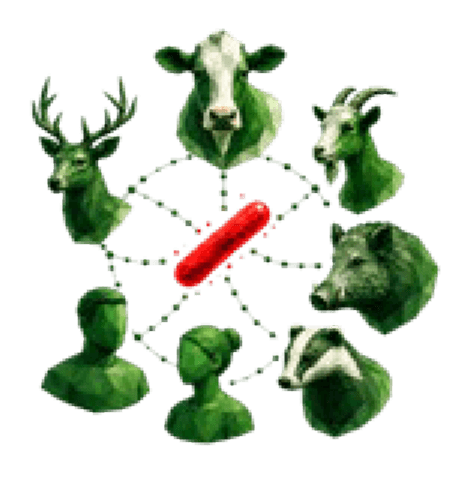 TB affects a multitude of animal species, notably domestic ruminants—especially cattle and goats—and various species of wildlife (Pesciaroli et al. 2014). However, animals can also transmit TB to humans due to the zoonotic nature of the disease (Roy et al. 2025).
Spain is the second country in the European Union with the highest incidence of zoonotic TB (0.16 cases per 100,000 inhabitants in 2024 (European Food Safety Authority/EFSA, European Centre for Disease Prevention and Control/ECDC 2025)).
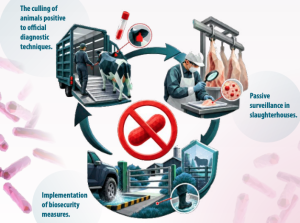
 Nevertheless, the impact of zoonotic TB has been significantly reduced over the years due, among other reasons, to the establishment of preventive measures such as milk pasteurization or the implementation of eradication programs in livestock (Kock et al. 2021).
Eradication programs (Ministerio de Agricultura, Pesca y Alimentación 2026) are mainly based on:
Diagnostic techniques (De La Rua-Domenech et al. 2006; Bezos et al. 2014) are based on the detection of cell-mediated immune responses through the use of purified protein derivatives (PPDs) as diagnostic reagents. These techniques are:
 The intradermal tuberculin test (IDTB) or “tuberculin skin test”.
The interferon-gamma release assay (IGRA).
 However, the eradication of the disease can be hindered, among other reasons, by the limited capacity of official diagnostic techniques to correctly detect infected animals in certain epidemiological contexts (Bezos et al. 2023; Pozo et al. 2023).

NEW STRATEGIES FOR THE IMMUNOLOGICAL DIAGNOSIS OF ANIMAL TUBERCULOSIS
The immune response against TB is complex and can be affected by multiple factors, which directly impacts the performance of diagnostic techniques and, therefore, their ability to accurately determine the infection status of animals (Bezos et al. 2014; Pollock and Neill 2002).
This limitation highlights the need to deepen our understanding of the host’s immune response against TB in order to identify additional immunological or physiological biomarkers that allow for the detection of infected animals that do not adequately express traditional diagnostic markers (Alvarez 2021).
Cytokine Detection
Cytokine detection represents a particularly relevant strategy, as it allows for the direct evaluation of the animals’ immune response against antigens of the MTBC mycobacteria (Smith et al. 2021).
 This principle forms the basis of the IGRA technique, which is based on the quantification of interferon-gamma (IFN-γ) after in vitro stimulation with PPDs from animal blood samples (Wood and Jones 2001).
Although this technique focuses on the detection of a single cytokine, the development and validation of platforms for the simultaneous detection of multiple cytokines could contribute to improving diagnostic sensitivity by identifying infected animals whose response to the disease is not limited to IFN-γ production (Velasco et al. 2026; Palmer et al. 2020). |
Diagnostic Reagents
The search for new diagnostic reagents capable of replacing the traditional PPDs used in TB diagnosis constitutes a line of research of special current interest (Middleton et al. 2025).
Certain limitations in the sensitivity and specificity of official techniques have been attributed to the use of PPDs as diagnostic reagents, since:
 They have an ill-defined composition.
They contain antigens common to non-tuberculous mycobacteria that cause cross-reactivity (Infantes-Lorenzo et al. 2017).
They differ in their biological activity among manufacturers or production batches (Good et al. 2011; Echeverría et al. 2024).
 In recent years, numerous investigations have been carried out that have allowed for the identification of the most immunogenic antigens of the MTBC capable of being produced as synthetic peptides or recombinant proteins, thus constituting a potential replacement for traditional PPDs (Jones et al. 2022; Fromsa et al. 2025; Lakew et al. 2025).
Among these potential candidates, recombinant proteins or antigenic preparations based on the combination of ESAT-6, CFP-10, and Rv3615c antigens with others stand out, whose sensitivity was similar to that of PPDb in small-scale studies (Middleton et al. 2025, 2021).
The stimulation of blood samples with these specific antigens, combined with the simultaneous detection of multiple cytokines, could represent a promising strategy to optimize the balance between sensitivity and specificity in the immunological diagnosis of TB. |
Relationship between psychogenic stress and reactivity to diagnostic techniques
Another key element to consider regarding the proper performance of diagnostic techniques based on the immune response is the immunosuppression states of animals due to phenomena such as stress or disease, among others (Álvarez et al. 2009; Humblet et al. 2009).
In this sense, studying the association between psychogenic stress markers and reactivity to diagnostic techniques could help identify infected animals that do not properly react to diagnostic techniques due to an insufficient immune response (Álvarez et al. 2009; Humblet et al. 2009).
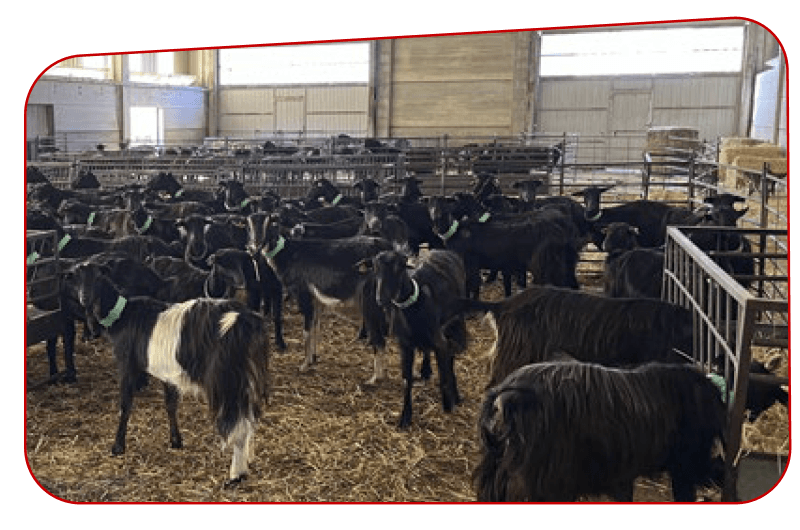
THE FOOTPRINT OF TUBERCULOSIS IN ANIMALS: BIOMARKERS, METABOLOMICS, AND MICROBIOTA
TB can cause biological alterations at different levels in animals.
Therefore, the identification of infected animals should not be limited solely to the detection of the immune response against the disease, but should be approached from a multidisciplinary perspective (Park and Yoo 2021).
Markers of Inflammation and Oxidative Stress
In parallel with cytokine release, as part of the host’s innate immune response (Gassó et al. 2016; Saco y Bassols 2023; Eckersall y Bell 2010), TB infection triggers the production of:
Acute phase proteins (APPs).
Reactive oxygen and nitrogen species (ROS and RNS, respectively), which can induce a state of oxidative stress when their production exceeds the host’s antioxidant capacity (Palanisamy et al. 2011).
Despite the fact that the quantification of APPs and oxidative stress markers has demonstrated diagnostic and prognostic potential in other infectious diseases of domestic ruminants (Baptistiolli et al. 2018; González et al. 2010), available scientific evidence regarding animal TB remains still limited. |
Metabolomics
 Metabolomics constitutes a tool of great interest, as it allows for the analysis of the set of small molecules in the organism, called metabolites, which sensitively reflect the host’s physiological state and its alterations in response to infectious or inflammatory processes (Alonso-Moreno et al. 2023).
Among the available platforms, nuclear magnetic resonance (NMR) spectroscopy offers relevant advantages due to its:
 High reproducibility.
Low sample preparation requirement.
Non-destructive nature.
Capacity to generate robust and comparable metabolic profiles.
NMR-based metabolomics could allow for the identification of metabolic signatures associated with:
 The presence of tuberculous disease (Alonso-Moreno et al. 2025; Ruiz-Cabello et al. 2022).
Phenotypes of special diagnostic interest, such as anergic animals or those with latent or subclinical infections.
Benchtop NMR equipment (Image 1) reinforces the possibility of transferring these approaches to the clinical and diagnostic field, as they are systems that are:
More accessible.
Lower in cost.
Without cryogenic requirements.
More easily implementable in veterinary laboratories.
The identification of metabolic patterns using benchtop NMR could contribute to the development of complementary tools to conventional immunological tests and improve TB detection in domestic ruminants. |
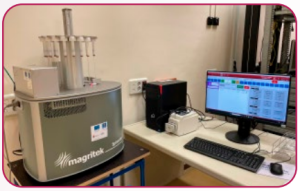
Image 1. Magritek Spinsolve 80 MHz ULTRA benchtop nuclear magnetic resonance (NMR) equipment.
Microbiome
Another factor that could play a fundamental role in susceptibility or resistance to TB infection is the host microbiome, given its close relationship with the immune system and defense mechanisms against infectious agents (Barbosa-Amezcua et al. 2022).
 The microbial communities of the gut and lung:
Participate in resistance against colonization by certain pathogenic agents (Barbosa-Amezcua et al. 2022).
Contribute to the development and modulation of the immune response through the so-called “gut-lung axis” (Khan et al. 2016), a system of bidirectional exchange of microbial products, metabolites, and cytokines between these organs (Budden et al. 2017).
Infectious diseases, such as TB, can alter this communication system and cause dysbiosis, understood as a modification in the diversity and composition of these bacterial ecosystems (Cerva et al. 2025).
Thus, the study and identification of microbiota patterns associated with TB could be of great use not only to improve knowledge about the interaction between the pathogen and the host during infection, but also to enhance the detection of the disease. |
 Así, el
 THE noTBio PROJECT
The national project “Identification and validation of novel biomarkers to improve the diagnosis of tuberculosis in domestic ruminants” (noTBio/PID2024-159293OB-I00/Ministry of Science, Innovation and Universities, State Research Agency):
 Will address the improvement of knowledge regarding the immune and pathophysiological response against TB in cattle and goats.
Will allow for the identification of biomarkers related to TB infection and, thus, the development and validation of methodologies that improve the antemortem diagnosis of TB.
This recently initiated project, with a duration of three years (2026–2029), will be carried out by renowned national research groups such as the Veterinary Health Surveillance Center of the Complutense University of Madrid (VISAVET-UCM; coordinator), the NMR and Biomedical Imaging Group of the Pluridisciplinary Institute of the UCM, and the Ramón y Cajal Health Research Institute (IRYCIS).
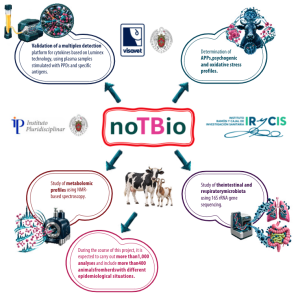
En conclusión, el proyecto noTBio ofrecerá un conocimiento más profundo de la respuesta del hospedador frente a la TB, así como el desarrollo y validación de nuevas metodologías diagnósticas que mejoren la detección de la TB en los rumiantes domésticos y contribuyan a acelerar su erradicación. In conclusion, the noTBio project will provide deeper insight into the host’s response to TB, as well as the development and validation of new diagnostic methodologies that improve TB detection in domestic ruminants and help accelerate its eradication. |
BIBLIOGRAPHY
1. Alonso-Moreno P, Ortiz P, Ortega J, Velasco C, López A, Bezos J, Izquierdo-Garcia JL. Metabolomic signatures of tuberculosis and paratuberculosis in goats revealed by high-resolution and benchtop NMR spectroscopy. Vet Res. 2025 Dec 12;57(1):11. doi: 10.1186/s13567-025-01686-7.
2. Alonso-Moreno P, Rodriguez I, Izquierdo-Garcia JL. Benchtop NMR-based metabolomics: First steps for biomedical application. Metabolites. 2023 Apr 29;13(5):614. doi: 10.3390/metabo13050614.
3. Alvarez AH. Revisiting tuberculosis screening: An insight to complementary diagnosis and prospective molecular approaches for the recognition of the dormant TB infection in human and cattle hosts. Microbiol Res. 2021 Nov;252:126853. doi: 10.1016/j.micres.2021.126853.
4. Alvarez J, de Juan L, Bezos J, Romero B, Sáez JL, Marqués S, Domínguez C, Mínguez O, Fernández-Mardomingo B, Mateos A, Domínguez L, Aranaz A. Effect of paratuberculosis on the diagnosis of bovine tuberculosis in a cattle herd with a mixed infection using interferon-gamma detection assay. Vet Microbiol. 2009 Mar 30;135(3-4):389-93. doi:10.1016/j.vetmic.2008.09.060.
5. Baptistiolli L, Narciso LG, Almeida BFM, Bosco AM, Souza JC, Torrecilha RBP, Pereira PP, Figueiredo RN, Garcia JF, Kaneto CN, Ciarlini PC. Systemic oxidative stress in Suffolk and Santa Ines sheep experimentally infected with Haemonchus
contortus. Acta Parasitol. 2018 Sep 25;63(3):504-514. doi: 10.1515/ap-2018-0060.
6. Barbosa-Amezcua M, Galeana-Cadena D, Alvarado-Peña N, Silva-Herzog E. The microbiome as part of the contemporary view of tuberculosis disease. Pathogens. 2022 May 16;11(5):584. doi: 10.3390/pathogens11050584.
7. Bezos J, Casal C, Romero B, Schroeder B, Hardegger R, Raeber AJ, López L, Rueda P, Domínguez L. Current ante-mortem techniques for diagnosis of bovine tuberculosis. Res Vet Sci. 2014 Oct;97 Suppl:S44-52. doi: 10.1016/j.rvsc.2014.04.002.
8. Bezos J, Sáez-Llorente JL, Álvarez J, Romero B, Díez-Guerrier A, Domínguez L, de Juan L. Bovine tuberculosis in Spain, is it really the final countdown? Ir Vet J. 2023 Jul 25;76(Suppl 1):13. doi: 10.1186/s13620-023-00241-0.
9. Budden KF, Gellatly SL, Wood DL, Cooper MA, Morrison M, Hugenholtz P, Hansbro PM. Emerging pathogenic links between microbiota and the gut-lung axis. Nat Rev Microbiol. 2017 Jan;15(1):55-63. doi: 10.1038/nrmicro.2016.142.
10. Budden KF, Gellatly SL, Wood DL, Cooper MA, Morrison M, Hugenholtz P, Hansbro PM. Emerging pathogenic links between microbiota and the gut-lung axis. Nat Rev Microbiol. 2017 Jan;15(1):55-63. doi: 10.1038/nrmicro.2016.142.
11. Cerva C, de Lima FM, Varela APM, Breyer GM, Vicenzi JM, Bertagnolli AC, Klain VF, Siqueira FM, Mayer FQ. Gut bacterial diversity in bovines infected with Mycobacterium tuberculosis var. bovis: insights on tuberculosis pathogenesis. Tuberculosis. 2025 Jul;153:102652. doi: 10.1016/j.tube.2025.102652.
12. de la Rua-Domenech R, Goodchild AT, Vordermeier HM, Hewinson RG, Christiansen KH, Clifton-Hadley RS. Ante mortem diagnosis of tuberculosis in cattle: a review of the tuberculin tests, gamma-interferon assay and other ancillary diagnostic techniques. Res Vet Sci. 2006 Oct;81(2):190-210. doi:10.1016/j.rvsc.2005.11.005.
13. Echeverría G, Zumárraga MJ, Proaño-Pérez F, Blasco FB, de Waard JH. Assessing the impact of various tuberculin PPD brands on bovine tuberculosis diagnosis. Sci Rep. 2024 Mar 2;14(1):5155. doi: 10.1038/s41598-024-52089-1.
14. Eckersall PD, Bell R. Acute phase proteins: Biomarkers of infection and inflammation in veterinary medicine. Vet J. 2010 Jul;185(1):23-7. doi: 10.1016/j.tvjl.2010.04.009.
15. European Food Safety Authority (EFSA), European Centre for Disease Prevention and Control (ECDC). 2025. The European Union One Health 2024 zoonoses report. EFSA Journal 23 (12): e9759. doi: 10.2903/j.efsa.2025.9759.
16. Fromsa A, Conlan AJK, Srinivasan S, Gumi B, Bedada W, Zeleke M, Worku D, Lakew M, Tadesse B, Bayissa B, Sirak A, Abdela MG, Mekonnen GA, Chibssa T, Veerasami M, Jones GJ, Vordermeier HM, Juleff N, Wood JLN, Ameni G, Kapur V. Comparative performance of tuberculin and defined-antigen cocktails for detecting bovine tuberculosis in BCGvaccinated cattle in natural settings. Sci Rep. 2025 Feb 7;15(1):4564. doi: 10.1038/s41598-025-85389-1.
17. Gassó D, Vicente J, Mentaberre G, Soriguer R, Jiménez Rodríguez R, Navarro González N, Tvarijonaviciute A, Lavín S, Fernández-Llario P, Segalés J, Serrano E. Oxidative stress in wild boars naturally and experimentally infected with Mycobacterium bovis. PLoS One. 2016 Sep 28;11(9):e0163971. doi:10.1371/journal.pone.0163971
18. González, F. H. D., F. H. Ruipérez, J. M. Sánchez, J. C. Souza, S. Martínez-Subiela y J. J. Cerón. 2010. Haptoglobin and serum amyloid a in subacute ruminal acidosis in goats. Revista de Medicina Veterinaria y Zootecnia 57: 159-167.
19. Good M, Clegg TA, Costello E, More SJ. The comparative performance of the single intradermal test and the single intradermal comparative tuberculin test in Irish cattle, using tuberculin PPD combinations of differing potencies. Vet J. 2011 Nov;190(2):e60-e65. doi: 10.1016/j.tvjl.2011.01.005.
20. Humblet MF, Boschiroli ML, Saegerman C. Classification of worldwide bovine tuberculosis risk factors in cattle: a stratified approach. Vet Res. 2009 Sep-Oct;40(5):50. doi: 10.1051/vetres/2009033.
21. Infantes-Lorenzo JA, Moreno I, Risalde MLÁ, Roy Á, Villar M, Romero B, Ibarrola N, de la Fuente J, Puentes E, de Juan L, Gortázar C, Bezos J, Domínguez L, Domínguez M. Proteomic characterisation of bovine and avian purified protein derivatives and identification of specific antigens for serodiagnosis of bovine tuberculosis. Clin Proteomics. 2017 Nov 2;14:36. doi: 10.1186/s12014-017-9171-z.
22. Jones GJ, Konold T, Hurley S, Holder T, Steinbach S, Coad M, Neil Wedlock D, Buddle BM, Singh M, Martin Vordermeier H. Test performance data demonstrates utility of a cattle DIVA skin test reagent (DST-F) compatible with BCG vaccination. Sci Rep. 2022 Jul 14;12(1):12052. doi: 10.1038/s41598-022-16092-8.
23. Khan N, Vidyarthi A, Nadeem S, Negi S, Nair G, Agrewala JN. Alteration in the gut microbiota provokes susceptibility to tuberculosis. Front Immunol. 2016 Nov 28;7:529. doi: 10.3389/fimmu.2016.00529.
24. Kock R, Michel AL, Yeboah-Manu D, Azhar EI, Torrelles JB, Cadmus SI, Brunton L, Chakaya JM, Marais B, Mboera L, Rahim Z, Haider N, Zumla A. Zoonotic tuberculosis – The changing landscape. Int J Infect Dis. 2021 Dec;113 Suppl 1(Suppl 1):S68-S72. doi: 10.1016/j.ijid.2021.02.091.
25. Lakew M, Conlan AJK, Tadesse B, Srinivasan S, Yalew B, Benti T, Olani A, Kinfe G, Ashagrie T, Abebe A, Fromsa A, Abdela MG, Bayissa B, Gebre S, Mihret A, Mekonnen GA, Ameni G, Ashenafi H, Wood JLN, Gumi B, Kapur V. Comparative performance and age dependence of tuberculin and defined antigen bovine tuberculosis skin tests assessed with Bayesian latent class analysis. Sci Rep. 2025 Jun 5;15(1):19728. doi:10.1038/s41598-025-05223-6.
26. Middleton S, Singh M, Coad M, Palmer S, Holder T, Steinbach S, Hardiman R, Vordermeier HM, Jones GJ. Optimization of a molecularly defined tuberculin formulation: recombinant fusion proteins and epitope surgery. J Clin Microbiol. 2025 Oct 8;63(10):e0055225. doi: 10.1128/jcm.00552-25.
27. Middleton S, Steinbach S, Coad M, McGill K, Brady C, Duignan A, Wiseman J, Gormley E, Jones GJ, Vordermeier HM. A molecularly defined skin test reagent for the diagnosis of bovine tuberculosis compatible with vaccination against Johne’s Disease. Sci Rep. 2021 Feb 3;11(1):2929. doi: 10.1038/s41598-021-82434-7.
28. Ministerio de Agricultura, Pesca y Alimentación. 2026. Programa Nacional de Erradicación de Tuberculosis Bovina 2026: Infección por el complejo Mycobacterium tuberculosis.
29. Palanisamy GS, Kirk NM, Ackart DF, Shanley CA, Orme IM, Basaraba RJ. Evidence for oxidative stress and defective antioxidant response in guinea pigs with tuberculosis. PLoS One. 2011;6(10):e26254. doi: 10.1371/journal. pone.0026254.
30. Palmer MV, Thacker TC, Rabideau MM, Jones GJ, Kanipe C, Vordermeier HM, Ray Waters W. Biomarkers of cellmediated immunity to bovine tuberculosis. Vet Immunol Immunopathol. 2020 Feb;220:109988. doi: 10.1016/j. vetimm.2019.109988.
31. Park HE, Yoo HS. Biomarkers as diagnostic tools for mycobacterial infections in cattle. Anim Health Res Rev. 2021 Jun;22(1):72-84. doi: 10.1017/S1466252320000195.
32. Pesciaroli M, Alvarez J, Boniotti MB, Cagiola M, Di Marco V, Marianelli C, Pacciarini M, Pasquali P. Tuberculosis in domestic animal species. Res Vet Sci. 2014 Oct;97 Suppl:S78-85. doi: 10.1016/j.rvsc.2014.05.015
33. Pollock JM, Neill SD. Mycobacterium bovis infection and tuberculosis in cattle. Vet J. 2002 Mar;163(2):115-27. doi:10.1053/tvjl.2001.0655.
34. Pozo P, Bezos J, Romero B, Grau A, Nacar J, Saez JL, Minguez O, Alvarez J. Once bitten twice shy: Risk factors associated with bovine tuberculosis recurrence in Castilla y Leon, Spain. Res Vet Sci. 2023 Jun;159:72-80. doi: 10.1016/j. rvsc.2023.04.011.
35. Roy Á, Gómez-Barroso D, Cruz-Ferro E, Fernández A, Martínez-Pino I, Del Henar Marcos M, Ursúa-Díaz I, Miras S, Echave N, Ouranou E, Romero B, Herrera-León L, Herrador Z; Study group on zoonotic tuberculosis. Spatiotemporal distribution and clinical characteristics of zoonotic tuberculosis, Spain, 2018-2022. Emerg Infect Dis. 2025 Jul;31(7):1344-1352. doi:10.3201/eid3107.250031.
36. Ruiz-Cabello J, Sevilla IA, Olaizola E, Bezos J, Miguel-Coello AB, Muñoz-Mendoza M, Beraza M, Garrido JM, IzquierdoGarcía JL. Benchtop nuclear magnetic resonance based metabolomic approach for the diagnosis of bovine tuberculosis. Transbound Emerg Dis. 2022 Jul;69(4):e859-e870. doi: 10.1111/tbed.14365.
37. Saco Y, Bassols A. Acute phase proteins in cattle and swine: A review. Vet Clin Pathol. 2023 Feb;52 Suppl 1:50-63. doi:10.1111/vcp.13220.
38. Schiller I, Oesch B, Vordermeier HM, Palmer MV, Harris BN, Orloski KA, Buddle BM, Thacker TC, Lyashchenko KP, Waters WR. Bovine tuberculosis: a review of current and emerging diagnostic techniques in view of their relevance for disease control and eradication. Transbound Emerg Dis. 2010 Aug 1;57(4):205-20. doi:10.1111/j.1865-1682.2010.01148.x.
39. Smith K, Kleynhans L, Warren RM, Goosen WJ, Miller MA. Cell-Mediated immunological biomarkers and their diagnostic application in livestock and wildlife infected with Mycobacterium bovis. Front Immunol. 2021 Mar 4;12:639605. doi:10.3389/fimmu.2021.639605.
40. Velasco C, Roy A, Cruz-Lopez F, Gomez-Buendia A, Ortega J, Mendez-Lopez S, de Juan L, Dominguez L, Romero B, Alvarez J, Bezos J. Exploring specific biomarkers in blood for in vitro diagnosis of caprine tuberculosis. Front Microbiol. 2026 Feb 20;17:1765857. doi: 10.3389/fmicb.2026.1765857.
41. Wood PR, Jones SL. BOVIGAM: an in vitro cellular diagnostic test for bovine tuberculosis. Tuberculosis. 2001;81(1- 2):147-55. doi: 10.1054/tube.2000.0272.
It may interest you: Evaluation of two experimental antigens (DST-F and P22) for the immunological diagnosis of tuberculosis in cattle
Continue reading this content
Register for free or log in to access all rumiNews content.